The Lipan Apache are part of the long Native history of Texas and the Southern Plains. Their story reaches across what is now Texas, New Mexico, northern Mexico, and nearby regions.
For centuries, Lipan families hunted, traded, moved with the seasons, made alliances, fought enemies, and adapted as new governments claimed their homelands.
Their history is not only about war. It is also about family, language, horses, buffalo, trade, ceremony, and survival.
Spanish, Mexican, Texan, and U.S. records often described the Lipan from an outside point of view. Reading the story today means looking at those records while also remembering that the Lipan were making their own choices in a changing world.
The Lipan Apache remain part of the region today. Communities and descendants continue cultural work, gatherings, education, and efforts to preserve identity.
One key chapter in that history is tied to the Spanish mission system. Our article on the 1758 attack on Mission San Sabá shows how Lipan, Comanche, Spanish, and allied interests collided on the frontier.
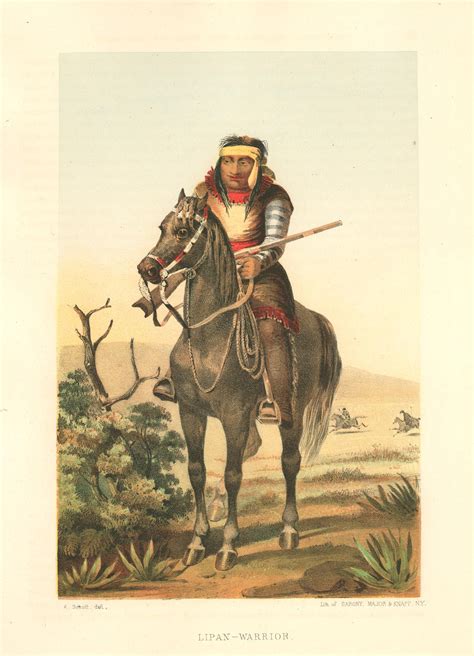
Who Are the Lipan Apache?
The Lipan are an Apache people. Apache languages belong to the Southern Athabaskan language family.
The Lipan became strongly tied to the Southern Plains. The National Park Service notes that their historic range stretched from southern Kansas into northwest Texas before pressure from other powers pushed many groups farther south and west.
They were skilled bison hunters and early users of horses on the Plains. Horses made it easier to hunt, move camp, trade, and travel over long distances.
The National Park Service history of the Lipan Apache gives a useful overview of their movement across Texas, New Mexico, and northern Mexico.
Life on the Southern Plains
Lipan bands moved with the seasons. Buffalo were a major food source, but people also hunted deer and other game and gathered useful wild plants.
Some communities also grew crops on a small scale. The balance between hunting, gathering, farming, and trade changed with place and season.
Homes needed to match a mobile life. Tipis and brush shelters could be built, used, and moved as families traveled.
The Texas Hill Country was part of the wider world in which Native nations, Spanish settlements, and later newcomers moved. A modern look at the land in Garner State Park and the Frio River country offers a sense of the rugged terrain that still shapes travel in the region.
Horses Changed Life and Power
Horses changed travel across the Plains. Hunters could follow bison farther. Families could move supplies faster. Trade and warfare also covered greater distances.
For a time, Lipan groups held strong positions on the southern bison range. That changed as Comanche power grew in the eighteenth century.
Competition over hunting land, trade, and alliances led to hard conflict. Comanche pressure helped push Lipan groups toward Spanish settlements around San Antonio and farther south.
Spain, Missions, and Uneasy Alliances
Relations with Spain shifted between trade, peace talks, alliance, and war. Lipan leaders sometimes sought Spanish support against stronger enemies.
Spanish officials hoped missions could bring Native communities into their system. But those plans often ignored older alliances and conflicts already shaping the Plains.
Mission San Sabá is one of the clearest examples. Spain built it in 1757 in part for the Lipan Apache. A large Comanche-led force destroyed the mission the next year.
The event showed that Spain did not control the region simply because it built a mission or fort. Native nations still held military and political power.
Trade, Raids, and Changing Borders
Lipan families traded hides, meat, horses, and other goods. They also took part in raids, as did many groups on the frontier.
The border itself kept changing. Spain gave way to Mexico. Texas became an independent republic and later joined the United States.
Those political changes did not erase older Native homelands. Lipan families moved across the Rio Grande and through areas that governments now treated as separate countries.
This is one reason frontier history is rarely simple. Our account of the Battle of Carthage shows another period when competing governments, local loyalties, and armed groups shaped life on the ground.
Language, Family, and Cultural Survival
The Lipan language is part of the Southern Athabaskan family. Like many Native languages, it suffered as governments and schools pressured Native people to use English or Spanish instead.
Language loss can happen quickly when children are punished for speaking the language of their families. Rebuilding language knowledge takes patient work across generations.
Culture also lives through stories, family names, gatherings, food, art, songs, and knowledge of the land. Survival does not require a culture to remain frozen in the past.
Lipan Apache Communities Today
Lipan descendants live in Texas, New Mexico, Oklahoma, northern Mexico, and other places. Some are members of federally recognized Apache tribes. Other Lipan communities organize separately in Texas.
The Lipan Apache Tribe of Texas is not a separately federally recognized tribe. Texas lawmakers have adopted resolutions honoring and recognizing the tribe’s long historical presence and contributions, while the legal meaning of state recognition in Texas is more complex than a single label suggests.
What is not in doubt is the continued presence of Lipan people and organizations. They hold gatherings, teach history, support veterans, share cultural knowledge, and work to keep community ties strong.
Learning More About Lipan Apache History
Good history is strongest when it uses Native voices along with government records, archaeology, oral history, and careful scholarship.
Readers who want a book-length starting point can browse books on Lipan Apache history or books on Apache history in Texas.
It also helps to compare Native history with later settlement stories. Our article on the founding of Colorado Springs shows how western settlement looked very different by the nineteenth century.
Why This History Matters
The Lipan Apache story changes the way we see Texas. The region was never empty land waiting for Spain, Mexico, Texas, or the United States to give it a history.
Native nations already had trade routes, rivalries, diplomacy, languages, and deep ties to the land.
The Lipan survived major shifts in power and borders. Their descendants continue to carry that history forward today.