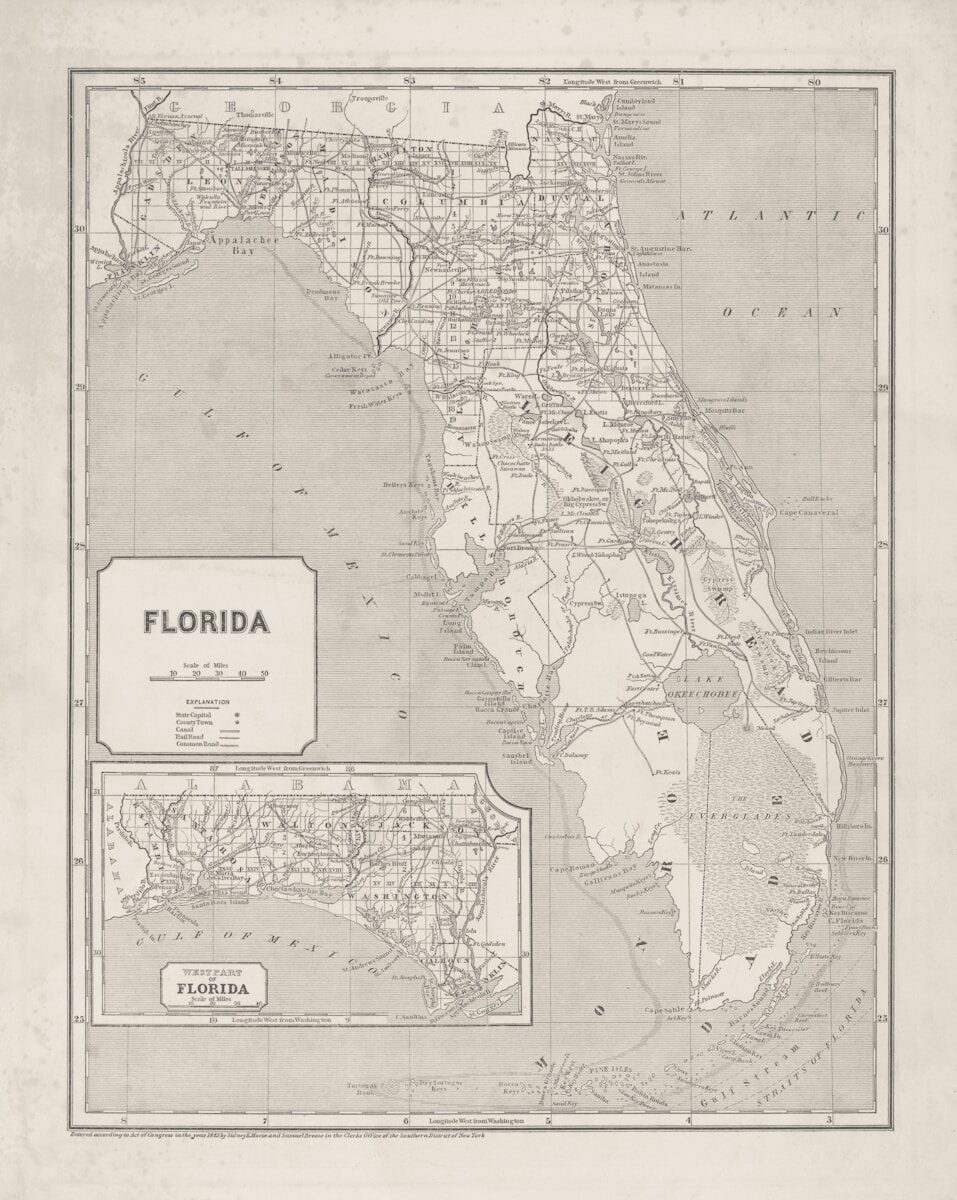
On July 17, 1821, Florida changed hands. Spain gave control of the territory to the United States.
The ceremony took place in Pensacola. Soldiers stood by as one flag came down and another went up. Andrew Jackson then took charge for the United States.
The change looked simple on that day. The road to it had been long.
Florida Before the Transfer
Native peoples had lived in Florida for many years. Spain claimed the land in the 1500s. Britain ruled it for a time. Spain later took it back.
By the early 1800s, Spain had trouble holding Florida. The United States was growing. Border fights grew more common. Seminole communities also faced more pressure.
Florida was part of a wider struggle over land and power. Similar border changes shaped places such as Kaskaskia on the western frontier.
The Adams-Onís Treaty
The legal path came through the Adams-Onís Treaty. Spain agreed to cede Florida. The two nations also settled other border claims.
The U.S. State Department’s history of the Florida acquisition explains how John Quincy Adams and Spanish minister Luis de Onís reached the agreement. Adams later built a long career in public life, which we cover in our story about John Quincy Adams and public service.
The treaty was signed in 1819. It took effect in 1821. Florida then became a U.S. territory.
Andrew Jackson’s Brief Role
Andrew Jackson was sent to receive Florida and start the new territorial government. He did not stay long. His job showed how much the region mattered to national leaders.
Readers who want a simple print companion can browse a Florida history book on Amazon.
A Hard Change for Many People
For many U.S. settlers, Florida meant new land and new trade. For Seminole people, U.S. rule brought more pressure and later war.
The change was also dangerous for free Black people and people who had escaped slavery. The new government was part of a slaveholding nation.
That is why the transfer was not a simple victory story. It changed life in very different ways for different people.
Florida in a Longer American Story
Florida’s transfer fits a much longer story of colonies, borders, and new governments. The same broad story can be seen in the early English settlement at Roanoke Island.
The state’s past is still tied to its land and wildlife. A modern look at that link appears in Noah’s Outdoors’ article on Florida’s black bear hunt and conservation debate.
July 17, 1821, remains a key date. It marks the day Spanish Florida became part of the United States and a new chapter began.