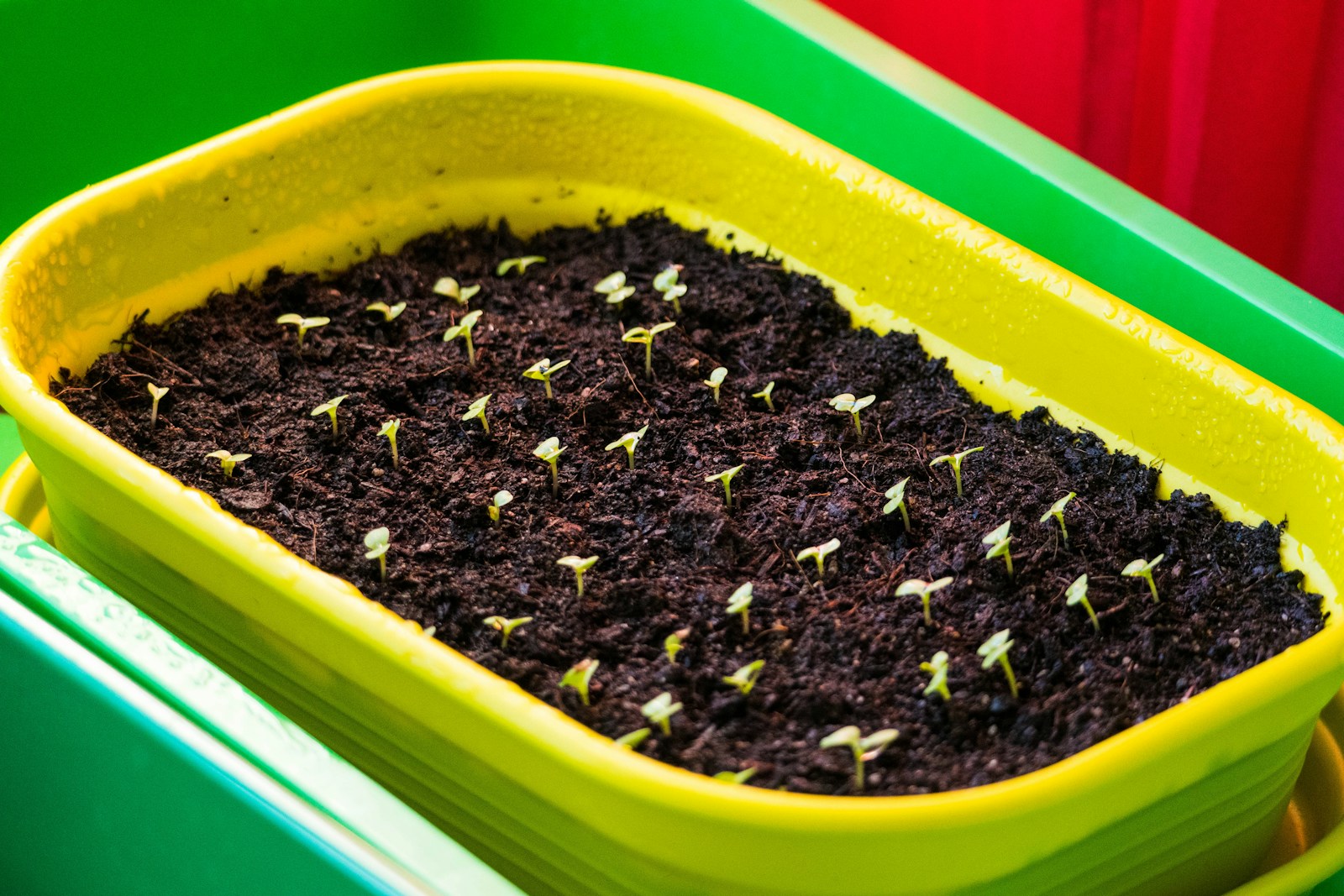
Seed germination starts when a living seed gets the moisture, temperature, and air it needs. Some seeds also need light or darkness, depending on the plant.
You do not need a complicated setup. Clean trays, fresh seed-starting mix, steady moisture, and the right temperature solve most common problems.
Warm-season crops often need more heat than a winter windowsill can provide. Cool-season crops usually sprout at lower soil temperatures.
Once seeds sprout, light becomes just as important as warmth. Weak light can make young seedlings stretch and fall over.
Water matters too. Seed mix should stay moist, but it should never sit soaked for long periods.
With those basics in place, you can add optional tools such as heat mats, soaking, or scarification only when a crop benefits from them.
Start With Clean Trays and Fresh Mix
Use containers with drainage holes. Cell trays, small pots, or recycled containers can all work if they are clean and let extra water escape.
The University of Minnesota Extension recommends a sterile, lightweight seed-starting mix, gentle moisture, steady warmth, and bright grow lights for indoor seedlings.
If you need a basic setup, a seed-starting tray search can help you compare trays with drainage and reusable cells.
Temperature Controls Germination Speed
Each crop has its own useful temperature range. Peas and lettuce can germinate in cool soil, while tomatoes, peppers, cucumbers, and many herbs prefer warmer conditions.
A heat mat can help warm-season seeds when the room is cool. Use one with care because warm trays can dry faster. A seedling heat mat with a thermostat gives better control than guessing.
Outdoor sowing also depends on soil temperature. This Alabama Grown guide to planting turnips is a good example of matching a cool-season crop to mild soil and air temperatures.
Keep the Mix Moist, Not Soggy
Dry seed mix can stop germination after it starts. Waterlogged mix pushes out air and can encourage rot and damping-off disease.
Bottom watering works well once seedlings are growing. Let the mix wick up water, then pour away excess so roots do not stay flooded.
When Soaking Seeds Helps
Large seeds with thick coats may benefit from a short soak before planting. Beans, peas, and some flowers are common examples.
Do not soak every kind of seed. Tiny seeds can become hard to handle, and long soaking can reduce the oxygen a seed needs.
If you want to use this method on a food crop, our fava bean growing guide covers a large-seeded cool-season legume from planting through harvest.
Scarification and Stratification
Scarification means weakening a hard seed coat so water can enter. It may involve gently rubbing the coat with sandpaper or making a small nick away from the embryo.
Stratification is different. Some seeds need a period of cool, moist conditions before they will sprout. Follow the seed packet or a reliable plant reference because the required time varies by species.
Give Seedlings Bright Light
After germination, move the focus from heat to light. Keep a grow light close enough to prevent stretching, but follow the light maker’s safe-distance directions.
Gentle airflow can also help stems grow stronger and reduce stale, humid conditions around crowded trays.
For herbs that are easy to start and grow in containers, our DIY herb garden guide offers a simple next step once seedlings are established.
Thin and Harden Off Seedlings
When several seedlings crowd one cell, keep the strongest plant and remove extras. Crowded seedlings compete for light, water, and root space.
Before planting indoors-grown seedlings outside, harden them off gradually. Start with a short stay in a sheltered spot, then increase outdoor time and light over several days.
If you are planning a larger seasonal garden, our February seed-starting guide shows which crops can be started early for a head start on spring.
Simple Germination Checklist
- Use clean containers with drainage.
- Start with fresh, lightweight seed mix.
- Match temperature to the crop.
- Keep moisture steady but never soggy.
- Give seedlings bright light after emergence.
- Use soaking, scarification, or stratification only when the seed benefits from it.
- Harden seedlings off before moving them outdoors.
Good seed starting is mostly about consistency. Give seeds the right conditions, check them each day, and make small adjustments before a minor problem becomes a failed tray.