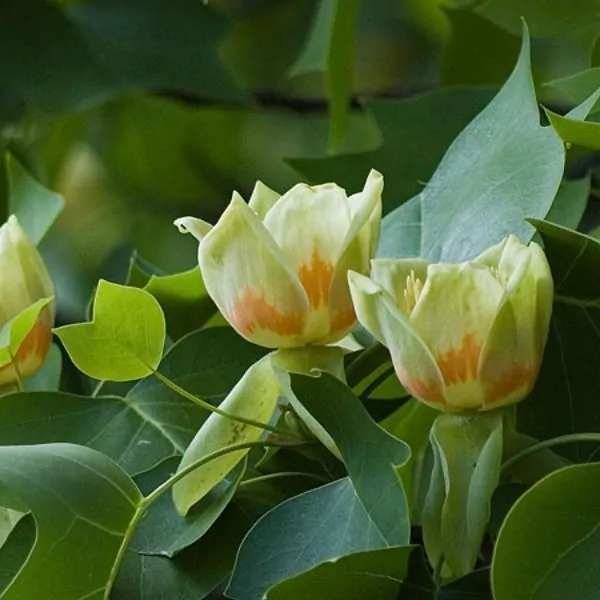
Tulip poplar is a big native tree with a bold shape, unusual leaves, and spring flowers that look a little like tulips. Its scientific name is Liriodendron tulipifera. It is also called tulip tree and yellow poplar.
This tree is not a true poplar. It belongs to the magnolia family. It grows naturally across much of eastern North America and can become one of the tallest trees in the forest.
A tulip poplar can grow fast when it has good soil, steady moisture, and enough room. That makes it useful as a shade tree on a large property. It is usually too large for a tight yard or narrow street planting.
The leaves are easy to spot. They have four main lobes and a flat-looking tip. In fall, the green leaves can turn clear yellow or gold.
Mature trees also make greenish-yellow flowers with orange near the base. The flowers can be hard to see because they often grow high in the crown. Bees, hummingbirds, and other wildlife can use the tree.
The key to success is simple. Give this tree space, good soil, and water while it gets established. Think about its mature size before you plant it near a house, driveway, sidewalk, or utility line.
How Big Does a Tulip Poplar Get?
Tulip poplar is a large tree. North Carolina State Extension lists a common landscape height of about 80 to 120 feet and a width of 30 to 60 feet. Its tulip tree plant guide also notes that the species prefers moist, well-drained soil and full sun.
That size is why placement matters so much. A young tree can look small for a few years, but it needs room for a broad crown and a large root system. If you are still planning the rest of your yard, our beginner home gardening guide gives a simple way to think about sun, soil, water, and plant spacing.
Choose the Right Planting Site
Pick a place with full sun if possible. Deep, moist, well-drained soil is ideal. The tree can handle some shade, but strong light usually gives it the best growth and form.
Avoid a spot where soil stays packed hard or where roots will have little room. Tulip poplar does not like severe drought or heavy soil compaction. Hot, dry weather can cause yellow leaves and early leaf drop.
If you are buying plants locally, it also helps to ask a nursery about trees that fit your soil and available space. Alabama gardeners can use the Alabama Grown retailer finder as one place to look for independent garden retailers.
Planting and Watering
Plant at the same depth the tree was growing before. Do not bury the trunk flare. Spread mulch over the root area, but keep mulch away from the trunk.
Water a new tree deeply when the soil starts to dry. The goal is moist soil, not a soggy hole. Keep watching moisture during the first few growing seasons, especially during hot weather.
A slow soak is often easier than standing outside with a hose. A tree watering bag can help with young trees. A soaker hose is another simple option for slow watering around the root zone.
Flowers, Leaves, and Wildlife
The spring flowers are one of the tree’s best features. They are cup-shaped, greenish yellow, and marked with orange. On a mature tree, many flowers sit so high that you may notice fallen petals before you notice the blooms.
The flowers can feed pollinators. Birds and small mammals also use the tree. Its seeds form in cone-like clusters and later separate into winged pieces.
If wildlife is part of your garden plan, do not make every fall cleanup too neat. Our fall garden cleanup guide explains why some leaves and stems can be useful in a healthy yard.
Pruning and Common Problems
Young trees can benefit from light training so they develop a sound shape. Remove dead, broken, or badly placed branches when needed. Large mature trees are a job for a trained tree professional.
Aphids and scale can bother tulip poplar. Some trees can also get leaf spots, cankers, or other diseases. Fast growth can mean weaker wood, so branches may break in strong wind, ice, or snow.
Is Tulip Poplar Right for Your Yard?
Choose tulip poplar when you have a large site and want a fast-growing native shade tree. Its flowers, unusual leaves, fall color, and wildlife value give it interest through much of the year.
Skip it when space is tight or when the soil is very dry and compacted. The best tree is not simply the prettiest one at the nursery. It is the tree that still fits the site decades after planting.