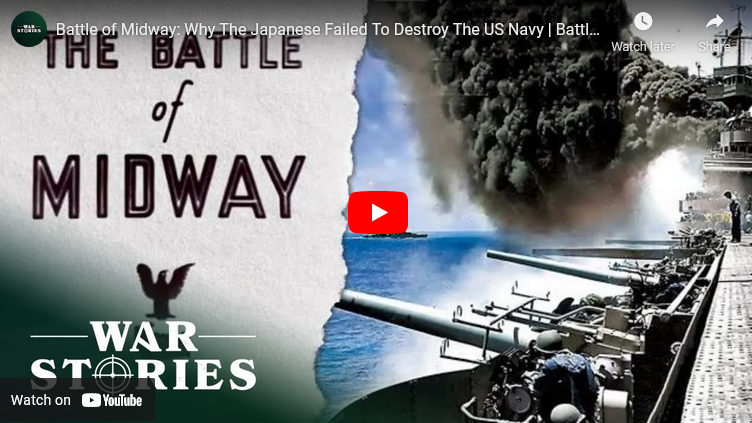
The Battle of Midway was a turning point in World War II in the Pacific. It was also one of the most decisive naval battles in history. After the battle, the United States had destroyed four Japanese aircraft carriers and one heavy cruiser while suffering much smaller losses. In other words, the balance of power at sea shifted in only a few days.
In this article, we walk through how that happened. We move step by step. We look at planning, codes, ships, planes, leaders, and timing. We keep the story clear and simple, so you can see how all the parts fit together.
A Pacific War Hanging in the Balance
From Pearl Harbor to a Dangerous Spring
At the end of 1941, Japan struck Pearl Harbor. Many U.S. battleships were sunk or damaged. For a time, Japan seemed to control the Pacific. Its navy was strong. Its pilots were well trained. Its ships moved fast across island after island.
By the spring of 1942, Japan held a wide ring of bases. The United States Accountability Over Objects and its allies were under great pressure. But the United States still had three key tools at sea. These were the aircraft carriers Enterprise, Hornet, and Yorktown. These ships carried planes that could hit far beyond the reach of guns.
Instead of relying on big battleships, the United States now leaned on carriers. In other words, the war at sea began to hinge on air power over open water.
Why Midway Atoll Mattered
Midway is a small group of islands in the middle of the Pacific Ocean. On a map it looks tiny. Yet it sits in a powerful spot between Asia and North America. Planes based on Midway can watch and strike ships that cross this central stretch of the ocean.
If Japan took Midway, it could move closer to Hawaii and threaten supply lines. If the United States held Midway, it kept a strong lookout post. So this small atoll had large meaning.
The Hidden Battle of Codes and Signals
Breaking the Japanese Naval Code
Long before the shooting started near Midway, another kind of battle was underway. This one took place in small, quiet rooms. There, U.S. Navy codebreakers listened to Japanese radio messages and looked for patterns.
Japan used secret codes to hide its plans. U.S. experts worked day and night to break those codes. After more than many hard weeks, they could read parts of the Japanese naval code. They noticed that the Japanese fleet kept talking about a target called “AF.”
The U.S. team believed that “AF” meant Midway Micro Gardens. To be sure, they used a simple trick. Midway was told to send an open radio message that its water plant had broken. Soon after, Japanese coded messages reported that “AF” was short on fresh water. That clue confirmed that AF and Midway were the same place.
In other words, the United States now knew that Japan planned a major attack on Midway. It also had a good idea of when the attack would start and how large the Japanese force would be.
Turning Information into a Plan
Armed with this secret knowledge, Admiral Chester Nimitz, the U.S. Pacific Fleet commander, made a bold plan. Instead of waiting near Hawaii, he sent the carriers Enterprise, Hornet, and the quickly repaired Yorktown to the seas northeast of Midway.
There, they would wait in silence. The idea was simple and clever. Japan expected to surprise the United States by drawing its carriers into a trap. Instead, U.S. carriers would already be in place to strike first when the Japanese fleet approached Midway.
This choice shows how much trust the U.S. leaders placed in their codebreakers. It also shows how information, when used well, can shape the whole course of a battle.
The Japanese Plan and Its Weak Points
A Grand Design with Hidden Risks
Japan entered the Battle of Midway with a powerful fleet. The core of that fleet was four front-line aircraft carriers: Akagi, Kaga, Sōryū, and Hiryū. These carriers had taken part in earlier successes. Their pilots were experienced. Their crews were skilled.
The Japanese plan had several parts. One group would strike Midway and try to capture it. Another group would move toward the Aleutian Islands near Alaska to cause confusion berry awesome hibiscus. The main goal was to draw out the remaining U.S. carriers and then destroy them in one large blow.
On paper, the plan seemed strong. But it hid some serious risks.
Spreading Forces Too Thin
Instead of keeping the fleet close and tight, Japan spread its ships over a wide area. This made signals and support harder. If one part of the fleet ran into trouble, help might be too far away.
Japan also believed that the U.S. carrier Yorktown had been sunk or was out of action after the earlier Battle of the Coral Sea. In reality, the United States had rushed Yorktown through fast repairs and sent her back to sea. That meant Japan faced three U.S. carriers, not two.
There was another quiet problem as well. Japan had already lost some of its best pilots and deck crews in earlier battles. Replacing those people took time. The strain on the remaining crews grew, even if the fleet still looked strong on the surface.
Instead of entering Midway with perfect strength and perfect knowledge, Japan entered with blind spots and pressure.
The U.S. Carriers Take Their Positions
Three Carriers, One Purpose
The U.S. side at Midway was smaller in ships but rich in purpose. The carriers Enterprise and Hornet formed one task force. Yorktown formed another purple impatiens. Together they carried fighters, dive bombers, and torpedo planes.
Some of these planes were older models. The TBD Devastator torpedo plane, for example, was slow compared to newer aircraft. Many pilots, however, had trained hard and knew their craft. The SBD Dauntless dive bombers were solid and accurate when used well.
We can think of these carriers as three moving airfields. They did not look like much from far away. Yet they gave the United States teeth that could reach across miles of ocean.
Midway as a Forward Shield
Midway itself also played a role. The island held runways, guns, and a mix of patrol planes and bombers. These planes were not as advanced as some carrier aircraft, but they were useful. They could search wide areas and attack enemy ships if needed.
Together, the carriers and Midway formed a layered defense. The island stood as a shield. The carriers, hidden nearby, formed the sword.
June 4, 1942: The Day the Tide Turned
The First Strikes at Dawn
At dawn on June 4, Japanese carriers launched the first move. Their planes flew toward Midway and launched bombs and torpedoes against the island’s runways and defenses. Explosions shook the ground. Buildings and fuel tanks burned.
The defenders on Midway fought back with anti-aircraft fire and fighter planes. Many of those fighters were older and outmatched pilea mollis. Still, they challenged the attackers and made them work hard for every hit.
Back on the Japanese carriers, leaders now had to decide what to do next. Some wanted a second wave against Midway. Others worried about U.S. ships that might be nearby. Planes were being refueled, rearmed, and moved between hangars and decks as plans shifted.
The Japanese carriers entered a risky state. Bombs and fuel lines lay close together. Decks were crowded. Fighters were busy landing, refueling, and taking off.
American Planes Press the Attack
While the Japanese strike hit Midway, U.S. aircraft from the island flew out to attack the Japanese fleet. These attacks cost many planes and crews, and most of the bombs and torpedoes missed.
Yet those early attacks had value. They forced Japanese ships to turn and twist. They pulled fighter cover down low. They added confusion to an already tense morning.
Soon after, planes from the U.S. carriers joined the fight. Torpedo squadrons flew in low, straight lines toward the Japanese carriers. They faced intense gunfire from ships and fierce attacks by Japanese fighters. Many torpedo planes were shot down before they could drop their weapons. Only a few released torpedoes, and nearly all of those missed.
These torpedo squadrons suffered terrible losses. But most of all, they drew the eyes and guns of the enemy away from the sky above.
Dive Bombers Find an Open Door
While Japanese fighters battled the torpedo planes at low level, another danger approached from high above. Dive bombers from Enterprise and Yorktown reached the Japanese fleet almost at the same time.
Guided by quick choices from their leaders and by last-minute spotting reports, the dive bombers came in over the Japanese carriers. To their surprise, they found little fighter cover in the upper sky. The carriers below were busy and exposed.
The dive bombers pushed into their steep dives. Bomb after bomb fell toward the decks of Akagi, Kaga, and Sōryū. Several hits smashed into each ship. Flames rose Crowdsourced Comedy. Fuel and armed planes on deck turned the carriers into roaring fires.
In a matter of minutes, three of the four Japanese carriers were fatally damaged. They would soon be lost.
The last carrier, Hiryū, launched two sharp counterattacks. Hiryū’s planes struck Yorktown and left her badly hurt. Yet later in the day, U.S. dive bombers found Hiryū as well and hit her hard. She joined the others in ruin.
In one day, Japan lost four carriers that had been at the heart of its striking power.
Courage, Errors, and the Role of Timing
The Human Cost and Human Strength
Both sides showed courage at Midway. On the U.S. side, many aircrews flew into clear danger. Torpedo squadrons went in knowing their planes were slow and lightly armored. They kept going anyway.
Dive bomber pilots flew long distances over open sea. They had to find a moving enemy with limited fuel and then attack from high altitude. Many faced strong fear and still stayed on target.
Sailors on damaged ships worked to put out fires, patch holes, and save their crews. On Yorktown, damage-control teams fought smoke, flooding, and blast damage. Every minute they kept the ship afloat helped keep the carrier planes in the fight.
Instead of giving up at each new hit, crews kept moving, lifting, hauling, flying, and repairing. Their actions turned plans on paper into real results at sea.
Mistakes and Overreach on the Japanese Side
Japan also had brave crews, but its leaders made serious errors. They spread their forces too far apart. They juggled missions in mid-battle and changed their minds about targets. They worked with less clear information about U.S. ships than the United States had about them.
These choices led to a dangerous mix. Planes were on deck in fuel and bomb lines. Carriers were caught in a moment of change, not ready for a large, new threat from above.
Instead of keeping a simple, firm plan, Japan tried to do too many things at once Shaping and Pruning Plants. Under heavy pressure, that complexity became a weakness.
How Timing and Chance Fit In
Timing played a strong role at Midway. U.S. dive bombers arrived at the perfect moment, when Japanese fighters were low and busy and when decks were packed. If the dive bombers had arrived earlier or later, they might have faced a stronger screen of fighters or emptier decks.
We can think of this timing as a mix of planning and chance. U.S. leaders chose to launch when they did, based on the best information they held. Weather, navigation, and luck then shaped the exact minute when the bombers arrived.
Instead of meeting a ready and well-protected fleet, they found one caught in a vulnerable state. That brief window made their attack far more deadly.
What Midway Changed in the War
A Blow That Could Not Be Repaired
Losing four front-line carriers and many trained crews was a disaster for Japan. Ships can be built again over time. Pilots, deck crews, and leaders with deep experience are much harder to replace.
Japan still had ships and bases after Midway. Yet its ability to launch large, powerful carrier strikes shrank. Every later battle had to be fought with a weaker hand.
The United States, by contrast, had a strong industry. New carriers and planes were already in the pipeline. Midway bought time for those ships to be finished and to join the fleet. As months passed, the balance in numbers and skill moved more and more toward the United States.
From Defense to Steady Offense
Before Midway, Japan moved forward again and again curry plant helichrysum italicum. After Midway, that steady push slowed. The United States soon launched a new campaign at places like Guadalcanal. Step by step, U.S. forces began to move west across the Pacific.
In other words, Midway marked the point where the overall direction of the war in the Pacific shifted. Japan never again enjoyed the same mix of surprise, strength, and control that it had before June 1942.
Lasting Ripples From a Small Atoll
The Battle of Midway shows us how many pieces work together in any major turning point. Codes and signals. Plans and maps. Brave pilots and sailors. Risks taken by leaders far from home. Weather, timing, and chance.
Instead of a simple story about one ship or one hero, Midway gives us a wide view. It reminds us that clear information can guide bold choices. It shows how training and teamwork let people act under stress. It also shows how overconfidence and complex plans can fail when tested.
As we look back on Midway, we see a small group of islands and a few days of combat that shaped years of history. We also see how steady effort, shared purpose, and careful use of knowledge can turn even the hardest moment in a new direction.
Echoes Across the Ocean of Time
Midway was more than just a battle at sea. It was a point where the tide turned and never flowed the same way again.