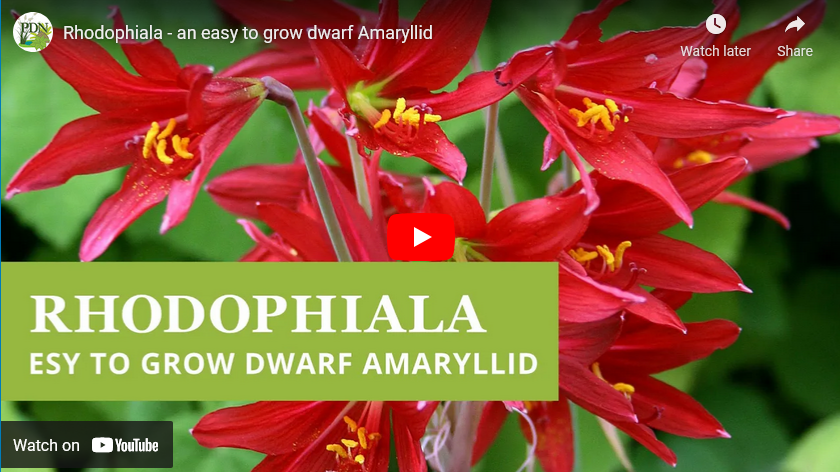
Rhodophiala is a name many bulb growers still know and use. These South American bulbs are loved for bright flowers, neat growth, and a strong seasonal rhythm.
The main care rule is simple: know which bulb you have. Plants once grouped under Rhodophiala do not all grow in the same season or need the same amount of water.
Modern plant naming also adds a wrinkle. Kew’s current Plants of the World Online treats Rhodophiala as a synonym of Phycella, while some former Rhodophiala species are now placed in other genera such as Zephyranthes or Rhodolirium.
That does not make the old horticultural name useless. It simply means a label with the full species name is much more helpful than a label that only says “Rhodophiala.”
Most of these plants are bulbous members of the amaryllis family. They often make a compact clump of leaves and send up colorful flower stalks at the right point in their yearly cycle.
Once you know the species, growing them is mostly about matching light, drainage, water, and dormancy to that natural cycle.
Start With the Plant Name
The Royal Botanic Gardens, Kew is a useful place to check a current botanical name. Kew treats the genus name Rhodophiala as a synonym, so a species that was sold under that name may now appear under another genus.
This matters because care can differ. Some bulbs grow during cool, wet months and rest in summer. Others grow during warmer months. A one-size-fits-all watering rule can cause trouble.
Give the Bulbs Fast Drainage
Good drainage is one of the safest starting points. Bulbs sitting in wet, airless soil are more likely to rot.
In containers, use a pot with a drainage hole. A loose potting mix with added perlite, pumice, or coarse mineral material can help water move through.
A terracotta pot with drainage is a simple choice for many bulb plants because it dries more freely than a sealed decorative container.
If you enjoy growing compact plants in pots, FootageVault’s Huernia zebrina care guide also shows why drainage and careful watering matter for plants with water-storing tissues.
Match Water to Active Growth
When leaves are actively growing, water enough to keep the plant from staying bone dry for long periods. Then let excess water drain away.
When the leaves naturally yellow and the bulb enters dormancy, reduce watering. The exact dry period depends on the species.
Do not force a dormant bulb to keep growing with heavy watering. Watch the plant. Its leaves tell you when the active season is slowing down.
Light Should Follow the Species
Many bulbs formerly sold as Rhodophiala enjoy bright light and can handle direct sun. But the safest choice still depends on the species, climate, and whether the plant was grown under cover.
Move a greenhouse-grown bulb into strong outdoor sun in stages. A sudden jump from shade to full afternoon sun can scorch leaves.
If you are laying out a small bulb bed, FootageVault’s guide to uncomplicated garden designs has simple ideas for grouping plants without making the bed feel crowded.
Planting Bulbs in Containers
Do not bury every bulb by a fixed formula. Planting depth varies by species and bulb shape. If your bulb came from a specialist grower, follow that supplier’s depth guidance.
Set the bulb in fresh, loose mix and leave enough room for roots. Water lightly after planting, then increase water as active root and leaf growth begins.
A small soil moisture meter can be useful as a rough check, but your finger and the weight of the pot are often better guides.
Gardeners who like bulb-grown color may also enjoy the Caladium ‘Manee Lomphet’ page at Wright Gardens. It is a different plant with different needs, but it shows another way bulbs can bring strong color to containers and beds.
Feeding Should Stay Light
Bulbs store energy. They usually do not need heavy feeding. During active growth, a light balanced fertilizer can support leaves and future flowers.
Avoid pushing soft growth with too much nitrogen. Good light, healthy roots, and the right seasonal rest matter more than constant fertilizer.
Dormancy Is Part of the Plant’s Life
Leaf loss does not always mean the bulb is dying. Many bulb plants have a normal dormant period.
Once the leaves yellow on their own, let them finish before removing them. Green leaves are still feeding the bulb.
During dormancy, keep the bulb in conditions that match its species. Some want a dry rest. Others come from places with a different seasonal pattern.
Propagation Takes Patience
Some bulbs make offsets that can be separated when the plant is dormant. Let small offsets grow until they have enough size to handle on their own.
Growing from seed can take longer, but it is rewarding. The basics of moisture, air, temperature, and clean media in FootageVault’s seed germination guide are useful starting points before you look up the needs of a particular species.
The Best Rule: Grow the Species, Not Just the Label
Plants sold as Rhodophiala can be beautiful and fairly easy when their natural season is respected. The biggest mistake is assuming every bulb under that old name wants the same care.
Find the full botanical name, give the bulb sharp drainage, watch its active growth, and let dormancy happen when the plant asks for it. That simple approach is safer than following one rigid recipe for every Rhodophiala-type bulb.