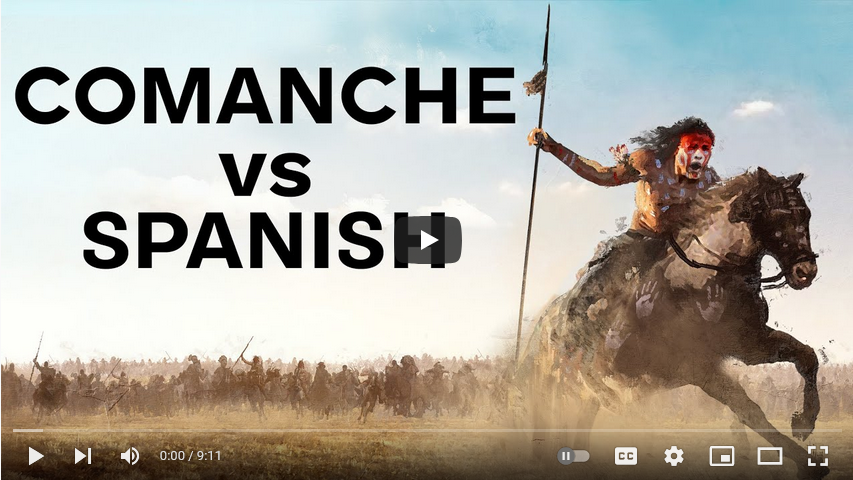
The Comanche Attack that Terrified the Spanish

The Comanche Attack that Terrified the Spanish

10 minutes, 22 seconds Read

The 1758 Attack on Mission San Sabá

How Comanche Power Shook the Spanish Frontier

On March 16, 1758, smoke rose over the San Saba River in what is now central Texas. A force of around two thousand Native warriors, led by Comanche bands and their allies, surrounded a small Spanish mission. By the end of the day the mission of Santa Cruz de San Sabá lay in ruins, several missionaries and residents were dead, and the Spanish frontier in Texas would never feel the same again.

From a United States point of view, this event looks like a small chapter far back in time. In reality, it was a turning point. Spectacular Lifesaver Plants That Will Amaze You: Huernia Cactus. The attack exposed the strength of Comanche and allied nations. It showed the limits of Spanish power in the region. It helped shape how Texas developed long before it became part of the United States.

Why the San Sabá Mission Was Built

Spain, Apaches, and a Northern Frontier

In the mid-1700s, Spain controlled much of what is now the U.S. Southwest. Texas sat on the northern edge of that empire. Spanish leaders worried about many things at once.

They wanted:

  • To convert Native peoples to Catholicism
  • To calm raids and warfare
  • To stop French traders from moving into Texas from Louisiana
  • To protect possible silver and other mineral wealth

One group in the middle of all this was the Lipan Apache. For years the Lipan Apache had fought with the Comanche and other nations. They had also raided Spanish settlements. At the same time, they sometimes asked for peace and for missions where they could farm and receive Spanish support.

Spanish officials finally agreed to create a mission for the Apaches along the San Saba River. A scouting party in the early 1750s reported fertile soil, possible mineral deposits, and Apache interest in the area. Plans moved forward.

Founding a Remote Outpost

In 1757 the mission of Santa Cruz de San Sabá was founded near today’s Menard, Texas. At the same time, a separate fort, Presidio San Luis de las Amarillas, was built a few miles away to protect the mission.

The plan looked strong on paper. A wealthy mine owner, Pedro Romero de Terreros, agreed to fund the mission for three years. His cousin, Father Alonso Giraldo de Terreros, would lead the missionaries. Soldiers, priests, and families brought livestock and supplies north from San Antonio and began to build.

Reality turned out very different.

  • Apache families did not move into the mission in large numbers
  • Raids and rumors continued
  • The area stayed dangerous and thinly settled

The mission sat in the middle of a contested landscape purslane flowers. And other Native nations were watching every move.


Why Comanche Leaders Saw a Threat

Old Enemies and New Alliances

To the Comanche and allied groups, the new mission looked like more than a church. It looked like a Spanish alliance with their old enemies, the Apaches. The mission signaled a possible plan to support Apache settlement right inside a region the Comanche considered part of their power base.

At the same time, many Comanche bands already had access to horses and European weapons. Some guns came through trade networks tied to French posts farther east. Comanche and Wichita villages used these tools to build strong economies and strong defenses.

The stage was set for conflict.

Rising Tension Before the Attack

In early 1758, signs of trouble gathered around San Sabá.

  • Native raiders attacked a supply train bound for the presidio
  • Horse herds for the fort were scattered and stolen
  • Scouts reported armed groups in the area

Spanish soldiers tried to chase the raiders but had little success. The presidio went on alert.

Commanders urged the missionaries to move inside the fort’s walls. The priests refused carolina reaper. They believed their work with Native peoples required them to remain at the mission compound itself.


The Attack of March 16, 1758

Two Thousand Warriors at the Mission Gates

On the morning of March 16, 1758, a large allied force descended on the mission. Spanish accounts describe about two thousand warriors from the Comanche and other Norteño tribes, including Tonkawa, Tejas, and other groups from North Texas.

Many of these warriors carried firearms, which was still unusual on the Plains at that time. At least half were armed with European guns along with bows, lances, and other traditional weapons.

The mission buildings were made of wood and other light materials. The presidio, with more soldiers and stronger defenses, sat miles away and could not respond in time chinese money plant.

The attackers:

  • Surrounded the compound
  • Fired on the defenders
  • Set the mission buildings on fire

Casualties and Escape

When the attack ended, the mission was destroyed. At least eight people were killed, including Father Terreros and another Franciscan missionary. Others were wounded. Livestock and supplies were lost or carried away.

A small group survived by taking refuge in the church, the largest structure, and then fleeing toward the presidio. About twenty people made it to safety.

The attackers did not storm the presidio itself. They gathered near the fort, tried to lure soldiers into a fight outside the walls, and then moved away after a short standoff.

Santa Cruz de San Sabá was gone. It became the only Spanish mission in Texas completely destroyed in a Native attack.


Shockwaves Through the Spanish Empire

Fear and Anger in New Spain

News of the destruction traveled quickly through Spanish Texas and into the wider colonies of New Spain. Officials felt shock, grief, and anger. The mission had been a high-profile project. A major benefactor had funded it. A respected priest had died there. The attack now looked like a blow to Spanish honor as well as to Spanish plans for the frontier.

Military leaders worried about more than pride. The San Sabá attack black begonia proved that Comanche and allied nations could organize a large, coordinated strike and overwhelm a mission outpost. It also showed that many of these warriors had rifles and muskets comparable to Spanish weapons.

The Ortiz Parrilla Campaign

In 1759 Spanish authorities ordered a major expedition to punish the attackers and reassert control. Colonel Diego Ortiz Parrilla, commander of the San Sabá presidio, led more than five hundred soldiers and Apache allies north into Comanche and Wichita territory.

The campaign ended badly for the Spanish.

  • They clashed with Native forces near the Brazos River
  • They pushed on to a large Wichita village near the Red River
  • The village was heavily fortified, with a stockade and even a moat
  • A French flag reportedly flew over the site

The Spanish attacked but faced strong resistance. After hours of fighting, they suffered heavy losses from gunfire and had to retreat, leaving cannon and equipment behind.

For many officers, the lesson felt clear. Native nations on the Southern Plains could meet Spanish forces head-on. They could use European-style fortifications and weapons. They could win.


How the San Sabá Attack Changed Texas History

A Turning Point on the Northern Border

After San Sabá and the failed Ortiz Parrilla expedition, Spanish leaders slowly pulled back from plans for deep expansion into Comanche territory. Reports from inspectors later in the 1760s described the presidio as offering little value. By 1769 the fort was moved south, and for decades Spain made only limited efforts to settle or control the region that would later episcia cupreata become central and western Texas.

This retreat mattered for the future United States.

  • It left large areas of Texas under the strong influence of Comanche and allied nations
  • It kept the region more loosely tied to Spanish towns like San Antonio
  • It opened space for later changes as Mexico gained independence and the U.S. frontier pushed west

For more than a century after San Sabá, conflict between Comanches and incoming settlers remained a central feature of life in Texas. Many historians see the 1758 attack as an early marker of that long struggle.

Native Power and Agency

From a modern U.S. perspective, it is important to see the San Sabá attack not only as a Spanish tragedy but also as a Native action with clear goals.

The allied force:

  • Responded to the perceived threat of an Apache-Spanish alliance
  • Defended control over hunting grounds and trade routes
  • Showed military skill, planning, and coordination

The event reminds us that Native nations were not passive in the face of European empires. They shaped the map, the wars, and the balance of power across North America.


Memory, Art, and Archaeology

A Painting of Fire and Martyrdom

The destruction of Mission San Sabá left a strong mark on the Spanish world. A few years after the attack, Pedro Romero de Terreros commissioned a large painting to honor his cousin and the other dead missionaries. The work is known as The Destruction of Mission San Sabá in the Province of Texas and the Martyrdom of the Fathers Alonso Giraldo de Terreros, Joseph Santiesteban.

Art historians believe this painting is the earliest known easel painting to show a specific historical event in Texas. It blends religious symbolism with a vivid image of the burning mission and the chaos of the attack. Centuries later the painting itself became part of a legal dispute when it was seized and returned to Mexico after being offered for sale in Texas pink caladium.

The painting shows how strongly the attack continued to live in Spanish and Mexican memory.

Finding the “Lost Mission”

For much of the twentieth century, the exact site of the mission remained uncertain. People spoke of San Sabá as the “lost mission of Texas.” A monument marked a general area, but the original buildings had vanished under soil, farming, and river change.

Beginning in the 1960s and especially in the 1990s, archaeologists searched more carefully. Excavations eventually uncovered hundreds of Spanish artifacts and helped confirm the location of the mission near Menard. Today the area is recognized as a Texas historic landmark, and the nearby presidio site is listed on the National Register of Historic Places.

When people in the United States visit Spanish mission sites in Texas, they often think first of San Antonio. The story of San Sabá adds another layer. It reminds us that missions were not only quiet churches. They could also sit at the center of fierce struggles over land, faith, trade, and survival.


Why This Frontier Story Still Matters

Connecting Past and Present

Today the United States includes a Texas that feels modern and fast-moving. Interstates cross the state. Cities like Austin, San Antonio, and Dallas grow and shift every year. It can be easy to forget that this same region once held fragile outposts connected by dirt roads and horse trails.

The 1758 attack on Mission San Sabá helps us remember senecio serpens that older world.

It shows:

  • How far Spanish imperial plans reached into what is now the United States
  • How Native nations such as the Comanche, Wichita, and others used horses, guns, and alliances to resist those plans
  • How one burned mission changed the way Spain thought about Texas and the Southern Plains

For people in the U.S. today, this story also invites a wider view of our own history. Texas did not move from empty land to ranches and suburbs in a single step. It passed through many hands and many dreams. Spanish missionaries, Apache leaders, Comanche war chiefs, French traders, and later American settlers all tried to shape the future of the same rivers and grasslands.

When we look back at March 16, 1758, we see more than a raid on a distant mission. We see a moment when Native power pushed back against empire, when one small community felt the force of a much larger struggle, and when the long story of Texas and the United States turned in a new direction.


Echoes Along the San Saba

The ruins of San Sabá no longer stand as they did in 1758. Yet the river still flows through golden dorsett apple central Texas. The land still holds traces of adobe, burned wood, and scattered artifacts. The story remains part of the larger story of the United States, of Native resilience, and of the ways frontiers shift over time.

When we remember the Comanche attack on Mission San Sabá, we honor all the lives caught in that moment and we see more clearly how the ground beneath modern Texas was shaped by fire, courage, belief, and survival.

Similar Posts