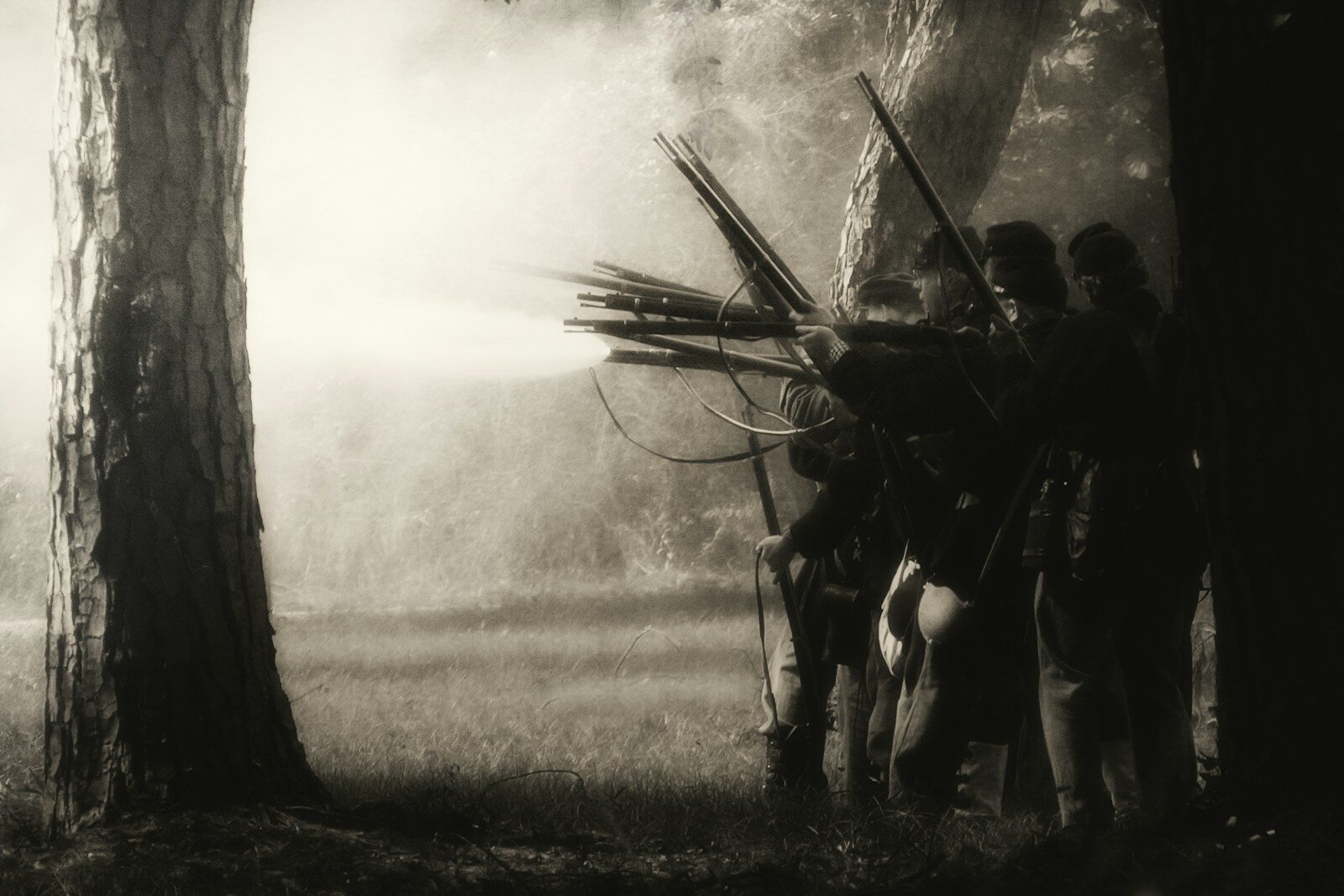
On July 9, 1863, war came to Corydon, Indiana. Confederate cavalry under John Hunt Morgan had crossed the Ohio River. Local militia and citizen volunteers moved to stop them.
The fight was short, but the moment was big. It showed that the Civil War could reach towns far from the best-known battlefields. For the people of Corydon, the war was no longer distant news.
Morgan’s Raid Moves North
John Hunt Morgan led more than 2,000 Confederate cavalrymen into Indiana during a fast raid through the region. His men crossed from Kentucky near Mauckport and moved toward Corydon.
The raid had several goals. Morgan wanted to pull Union troops away from other areas. His men also took horses, food, and supplies. They damaged rail lines and other key sites as they moved.
News of the raid spread fast. Indiana leaders called out militia. Men who had been working farms, shops, and local jobs suddenly had to help defend their towns.
At Corydon, about 400 local defenders built a rough line south of town. They used logs and other simple barriers. They knew Morgan had a much larger force, but they still chose to make a stand.
The Fight South of Corydon
The Indiana Historical Bureau says about 400 militia and citizen volunteers faced roughly 2,400 of Morgan’s cavalry. The defenders held a wooded ridge south of town. Morgan’s men then used cannon fire and moved around the local line.
The local force could not hold forever. Many defenders were captured after the line broke. Corydon then fell under Morgan’s control for a short time.
The Indiana Historical Bureau’s Battle of Corydon marker gives a clear summary of the fight. It also shows how a small local force tried to slow a far larger cavalry raid.
Why the Stand Still Mattered
The defenders did not win the battle. Still, their stand mattered. It forced Morgan to stop and fight. It also showed that local resistance could make a raiding force spend time and effort.
That idea also appears in our story about the Battle of Carthage. Small and early fights can look minor next to famous battles, yet they still show how people faced war when it reached their own ground.
Corydon also reminds us that roads and travel routes shaped the war. Morgan’s men had to move fast. They needed horses, crossings, and clear routes. The same role of movement and transport appears in our look at the rise of the B&O Railroad.
The War Reaches the Home Front
For local families, this was not a map lesson. It was personal. People heard that armed riders were coming. Men left home to defend the area. Shops and farms faced the risk of loss.
Morgan’s Raid brought fear across southern Indiana. Towns had to react fast. Some people fled. Others joined local defense units. The raid made the war feel close in a way newspaper reports could not.
For a modern look at how Indiana communities still deal with local issues, this Tuars article on Indiana property tax changes offers a very different kind of state story. The topic is modern, but the local focus is the same: public choices become real when they reach homes and towns.
Indiana’s Wider Civil War Role
Indiana was deeply tied to the Union war effort. The state sent many soldiers and supplied food, animals, money, and other support. Corydon was one visible battle inside a much larger state effort.
The battle also gives us a useful place to slow down. Large wars are easy to turn into dates and totals. A small town story brings the scale back to people and choices.
That is also why local history matters. Our article on the founding of Colorado Springs shows how one place can open a window into a much larger national story.
A Good Way to Learn More
Battlefield visits, maps, and books can make this story easier to picture. A simple book on Morgan’s Raid and the Civil War in Indiana can add more detail about the route, the people, and what happened after Corydon.
It also helps to look at the land. Roads, hills, rivers, and town streets explain why people moved where they did. History often makes more sense once we see the ground under the story.
Why Corydon Is Worth Remembering
The Battle of Corydon was not one of the war’s largest fights. It did not decide the war. Yet it still matters because it shows what happens when a national crisis reaches a small community.
Local men stood against a much larger force. Families watched war arrive at their door. Morgan moved on, but Corydon kept the memory. That makes the battle more than a footnote. It is a clear story of place, fear, duty, and resistance.