The United States holds an amazing range of places. You can see ocean cliffs, desert canyons, snowy peaks, deep forests, small towns, and huge cities.
This guide is a coast-to-coast tour. It follows the spirit of the 80-place travel video below without trying to rank every stop.
You can use it to plan a real trip. You can also use it to choose one region and start dreaming.
The best trips are often smaller than the map makes them look. Pick a few places that fit the same route and give yourself time to enjoy them.
Some stops are famous for wild land. Others are known for music, food, history, or city life.
Together, they show how different one country can feel from one coast to the other.
Start on the Atlantic Coast
Acadia National Park in Maine mixes rocky shore, pine forest, and mountain views. It is a good place to watch the sun rise, walk beside the ocean, and explore short scenic roads.
Farther south, New York City brings a very different kind of wonder. Central Park, the Statue of Liberty, Broadway, museums, bridges, and neighborhoods can fill several days.
History travelers can also build a stop around Pennsylvania. Our guide to the Battle of Gettysburg gives background for one of the country’s best-known Civil War sites.
Follow the Mountains South
The Great Smoky Mountains sit on the Tennessee and North Carolina border. Forested ridges, streams, old cabins, and misty valleys make the park feel gentle even when the trails climb.
Great Smoky Mountains was the most visited national park in 2025. The National Park Service recorded more than 11.5 million recreation visits there that year.
New Orleans adds music and food to a southern route. The French Quarter, Mississippi River, live jazz, and Creole and Cajun flavors give the city a strong sense of place.
Farther east, the Florida Keys offer a long road over blue water. Key West sits near the end of the Overseas Highway, with boats, pastel homes, and famous sunset views.
Take a Classic Road Through the Heartland
Chicago is a natural starting point for a long road trip west. The city has lakefront parks, tall architecture, music, food, and the eastern end of historic Route 66.
Old Route 66 runs through a chain of towns, diners, signs, motels, and roadside landmarks. You do not need to drive every mile to enjoy its story.
A printed USA road atlas on Amazon can be useful as a backup when a trip moves through areas with weak cell service.
Enter Canyon Country
The Grand Canyon is one of the great stops of the Southwest. Layers of rock fall away toward the Colorado River, and the light changes the view all day.
Nearby parts of Arizona and Utah add Antelope Canyon, Monument Valley, Zion, Bryce Canyon, Arches, and Canyonlands.
These places need care. Heat, distance, elevation, and limited water can turn an easy-looking outing into a hard day.
If you want smaller and quieter outdoor ideas too, our guide to hidden nature escapes offers a useful contrast to the most famous landmarks.
See Yellowstone and the High Rockies
Yellowstone brings geysers, hot springs, broad valleys, and large wildlife into one park. Old Faithful and Grand Prismatic Spring are famous, but the open valleys can be just as memorable.
Grand Teton sits just south of Yellowstone. Its sharp peaks rise above lakes and wetlands.
Rocky Mountain National Park in Colorado adds high roads, alpine tundra, elk, and long mountain views.
The National Park Service reported more than 323 million recreation visits across its sites in 2025. Its 2025 visitation report also lists Great Smoky Mountains, Zion, Yellowstone, Grand Canyon, Yosemite, Rocky Mountain, and Acadia among the ten most visited national parks.
Cross California to the Pacific
Yosemite is known for granite walls, waterfalls, forests, and the wide view of Yosemite Valley.
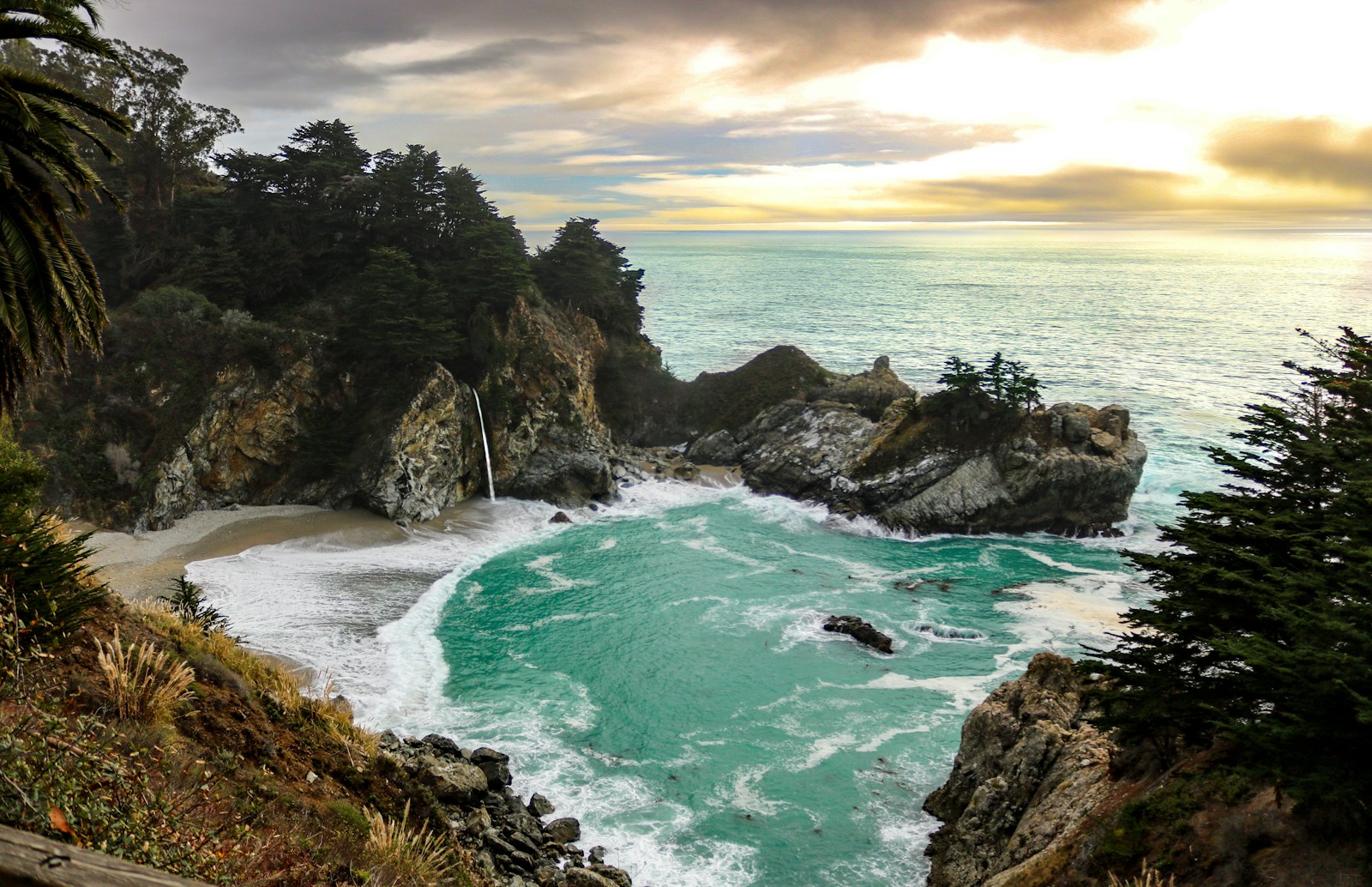
Farther west, the Big Sur coast follows steep cliffs above the Pacific. Highway 1 can be beautiful, but road conditions and closures can change, so check before driving.
North of San Francisco, coastal redwood forests hold some of the tallest trees on Earth. Fog, ferns, and giant trunks give the forest a quiet feel.
Binoculars can make wildlife stops more rewarding. There are many compact travel binoculars on Amazon that fit easily in a day pack.
Add Famous West Coast Cities
San Francisco is easy to recognize by the Golden Gate Bridge, steep streets, cable cars, and bay views.
Los Angeles spreads across a much larger area. Beaches, film history, Griffith Observatory, food neighborhoods, and mountain views make it a trip with many different parts.
Seattle brings ferries, water, city markets, and mountain views to the Pacific Northwest.
For a very different look at a modern city shaped by technology, you can compare these stops with our guide to Shenzhen, China.
Hawaii Adds Lava, Reefs, and Island Landscapes
Hawaii is not one single kind of trip. Each major island has its own feel.
- Oahu mixes Honolulu, Waikiki, history, food, and surf.
- Maui is known for beaches, Haleakalā, and the Road to Hana.
- Kauai has steep green scenery, Waimea Canyon, and the Na Pali Coast.
- Hawaiʻi Island has large lava fields and active volcanic landscapes.
Check local conditions before visiting active volcanic areas. Access can change when hazards change.
Finish With Alaska
Alaska feels larger and wilder than most places in the country. Glaciers, whales, tundra, long summer days, and huge mountain ranges shape the trip.
Denali is the highest mountain in North America. The park around it protects a vast landscape where wildlife and weather set the pace.
Our article on how Alaska became the 49th state adds useful history to a trip through the region.
Plan a Better Road Trip
Do not try to see the whole country in one rushed loop. Pick a region, season, and theme.
- Check park alerts, road closures, weather, and reservation rules before you leave.
- Leave extra time between long drives.
- Carry water, basic food, and a paper map in remote areas.
- Stay on marked trails and respect local rules.
- Support local businesses where you travel.
For camping stops, this Noah’s Outdoors guide to Leave No Trace and responsible camping is a useful reminder to stay on durable surfaces, pack out waste, and protect the places you visit.
Choose the Places That Call to You
A coast-to-coast list can feel huge. It becomes manageable when you choose one small piece.
Maybe that means a week in Utah. Maybe it is a drive through New England, a city trip to New York, or a summer visit to Alaska.
The United States offers enough variety for many different trips. You do not need to see all 80 places at once. Start with the ones that make you want to go.