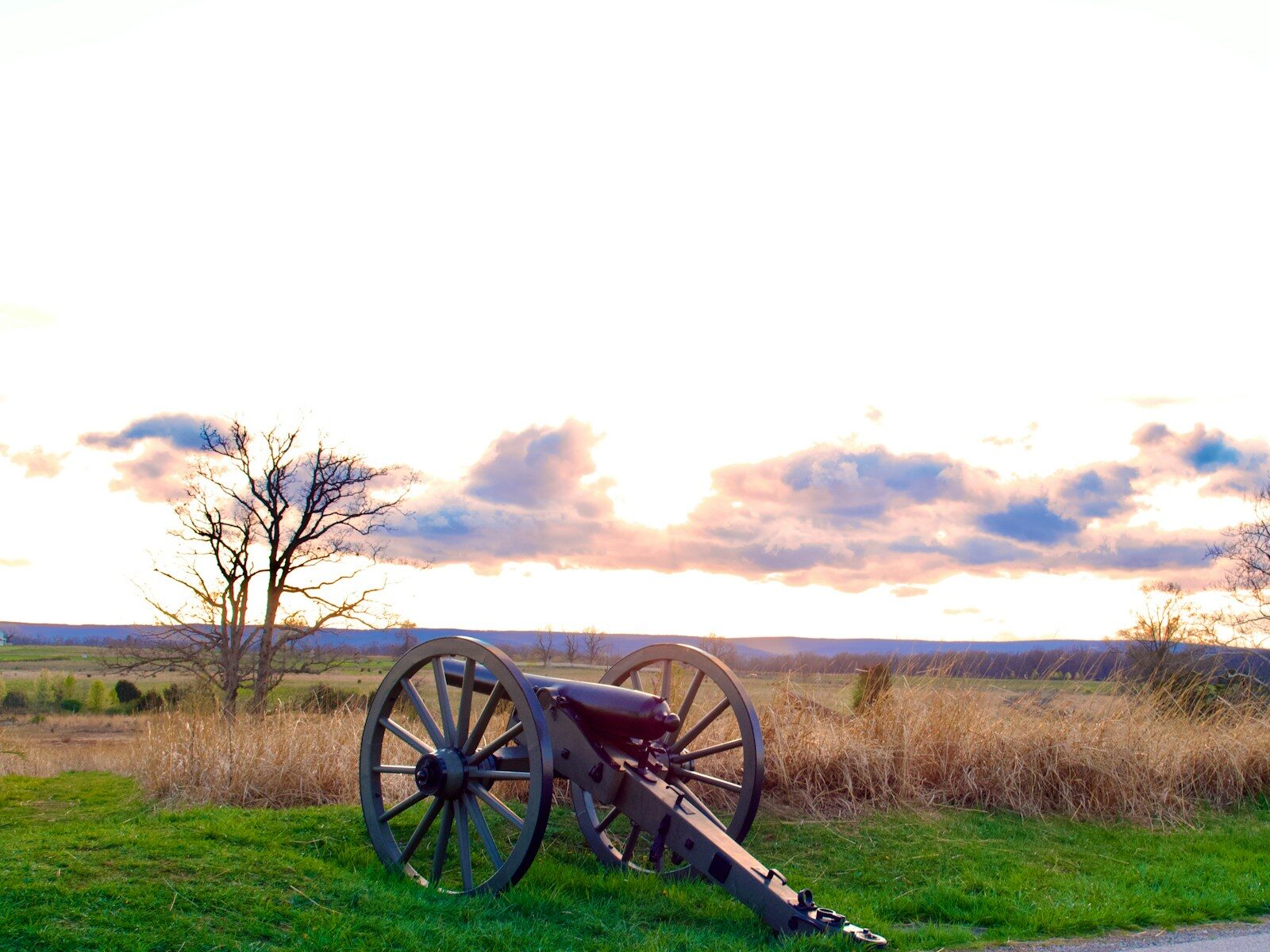
The Battle of Gettysburg was fought from July 1 to July 3, 1863. In just three days, a small Pennsylvania town became the site of one of the Civil War’s largest and most important battles.
Union and Confederate armies met around farms, roads, ridges, and streets. By the end, the battle had changed the course of the war and left a huge human cost.
Why Gettysburg Mattered
Confederate General Robert E. Lee had moved his army north. A major win on Union soil could have hurt Northern morale and changed the political mood.
Instead, Union forces under General George G. Meade held their ground. The result stopped Lee’s advance and forced the Confederate army back toward Virginia.
The National Park Service calls Gettysburg a turning point in the war. Its Gettysburg overview explains how the fighting unfolded across three days.
That makes Gettysburg a strong match for our look at the Battle of Atlanta. Both battles show how control of a place could shape a much larger campaign.
Three Days of Hard Fighting
The first day pushed Union troops back through town. They then formed a stronger line on high ground south of Gettysburg.
On the second day, fighting spread across places such as Little Round Top, the Wheatfield, Devil’s Den, and Culp’s Hill.
On July 3, Lee ordered the attack known as Pickett’s Charge. Confederate troops crossed open ground toward the Union center and were driven back with heavy losses.
The Human Cost
Gettysburg was more than a map of troop lines. Soldiers were killed, wounded, or missing by the thousands. Homes and barns became places of care for the wounded.
The battle also changed life for the people who lived there. Farms were damaged. Families faced fear, loss, and the hard work of recovery.
Other Civil War battles show the same local cost. Our article on the Battle of Carthage looks at an earlier fight where a town and its people were pulled into the war.
Why the Battlefield Still Matters
People still visit Gettysburg because the land helps make the story real. The ridges, fields, stone walls, and roads give shape to events that can feel distant in a book.
If you want to follow the battle in more detail, a Gettysburg battlefield map or guidebook can help you match the ground to the events.
The Battle of Corydon offers another useful contrast. Gettysburg was huge. Corydon was much smaller. Yet both show how war could reach ordinary communities.
A Place to Remember
A few months after the battle, Abraham Lincoln came to Gettysburg and gave a short speech at the new national cemetery. His words tied the battle to the larger question of what the nation would become.
Many visitors also spend time outdoors across Pennsylvania. If a trip includes more than the battlefield, this guide to Pennsylvania fishing seasons is a useful way to plan time outside while respecting local rules.
Gettysburg still matters because the battle changed the war, but also because it makes the cost of war hard to ignore. The fields are quiet now. The history is not.