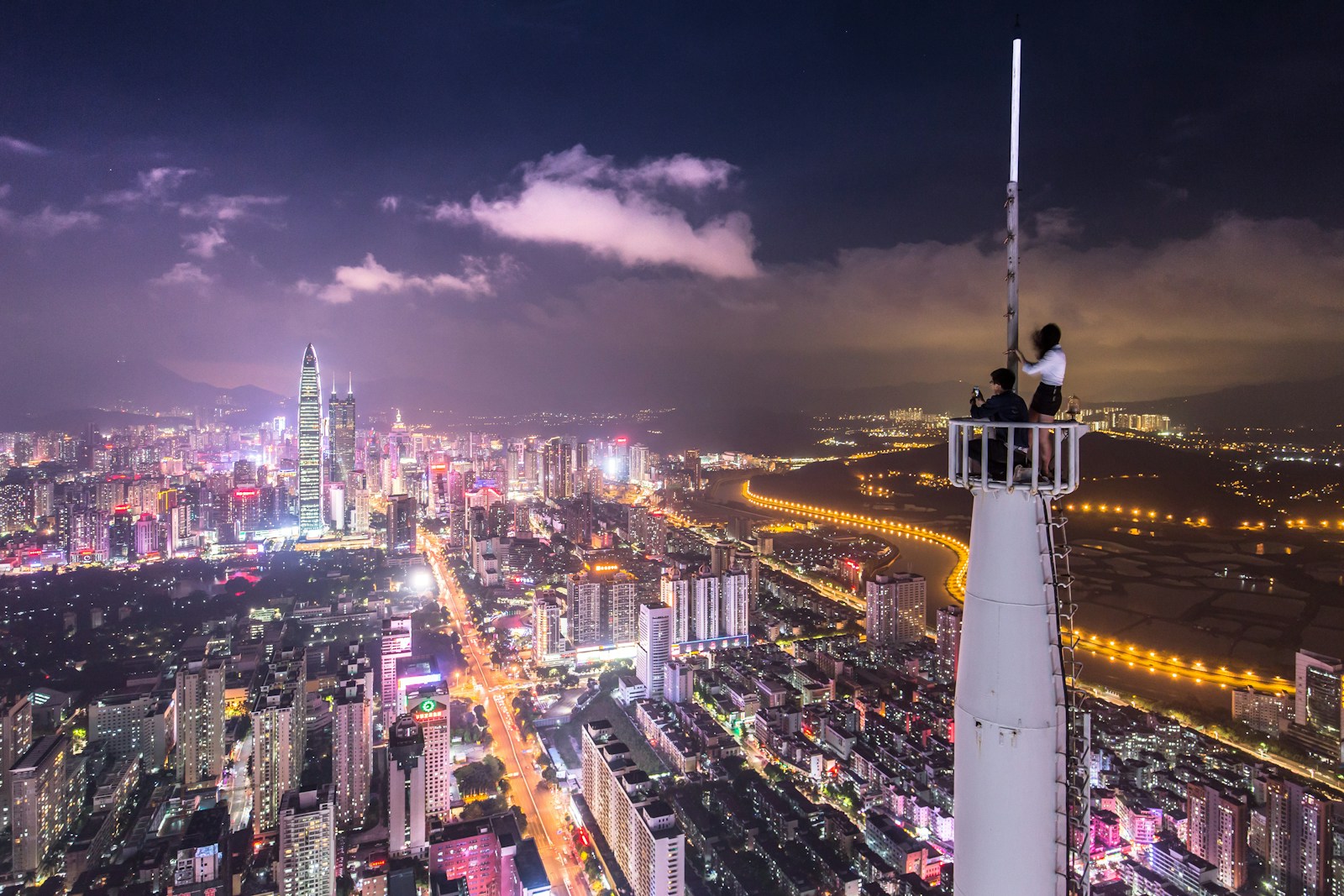
Shenzhen feels fast. Tall towers fill the skyline. Electric cars move through wide streets. Tech shops, factories, labs, and new ideas sit close together.
The city is also young by the standards of major world cities. Its modern rise took shape over just a few decades.
That short history is part of what makes Shenzhen so interesting. You can see old neighborhoods, huge electronics markets, new transit, and bold architecture in the same day.
Technology is not hidden away in one business district. It is part of the city’s identity.
Visitors may notice drones, electric vehicles, smart payment systems, robotics displays, and bright digital signs. Yet the city is still a place where people work, eat, shop, commute, and raise families.
That mix of ordinary life and fast change is the real story.
From Border Town to Special Economic Zone
Shenzhen was established as a city in 1979. In 1980, it became China’s first Special Economic Zone.
That change opened the door to investment, factories, trade, and rapid growth. Over time, Shenzhen became much larger and much more important to China’s economy.
The Shenzhen government’s history of the Special Economic Zone describes the city’s shift from a small town into an international innovation hub.
Today, Shenzhen is known for hardware, telecommunications, software, electric vehicles, drones, and other high-tech industries.
Why Hardware Matters Here
Shenzhen is home to major companies such as Huawei, Tencent, DJI, and BYD. It is also full of smaller suppliers and workshops.
That network matters. A new device needs more than an idea. It needs boards, sensors, cases, batteries, motors, connectors, software, and people who know how to put those parts together.
Our guide to AI-powered tools looks at the software side of modern technology. Shenzhen shows the physical side too.
If you want a simple look at one small part inside modern electronic equipment, this guide to backplanes explains how modular hardware can share power and data through one board.
Huaqiangbei Is a Hardware Landmark
One of the best-known places in Shenzhen is Huaqiangbei. The district is packed with electronics shops and markets.
Visitors can find cables, screens, chips, tools, cameras, phone parts, batteries, lights, and many other components.
The scale can feel overwhelming. One floor may focus on repair parts. Another may be full of finished gadgets. Small shops sit beside larger sellers.
For makers and product builders, the appeal is simple. Many of the parts needed for a prototype can be found in one district.
Electric Vehicles Are Easy to Notice
Shenzhen is also closely tied to electric transportation. BYD is based in the city, and electric buses, taxis, and private cars are common sights.
The change can make traffic sound different. Electric vehicles are quieter at low speeds than many gasoline vehicles.
Smartphones are part of this travel system too. Payments, maps, ride services, tickets, and messages often run through mobile apps. Our history of smartphones gives useful background on how much these pocket devices have changed daily life.
Drones and Robots Fit the City’s Image
Drones are a natural part of Shenzhen’s tech story because DJI is based there. Delivery and service robots have also been tested in parts of the city.
Some systems are still limited to certain routes, zones, or uses. That is important to remember. A demo in one district does not mean every visitor will see the same service everywhere.
The larger point is easier to see. Shenzhen gives companies a dense urban setting where new hardware can be built, tested, changed, and tried again.
The Skyline Becomes Part of the Show
At night, the city can feel very different. Office towers glow with large LED displays. Futian is known for bright skyline views and public light shows.
The effect fits Shenzhen well. Technology is not only inside devices. It becomes part of the city’s look.
A small travel power bank from Amazon can be useful for long days of maps, photos, translation, and mobile payments while exploring a city like this.
A Visit Is More Than Tech
It would be easy to visit Shenzhen and look only at screens and machines. That would miss part of the city.
There are parks, food streets, older neighborhoods, shopping areas, waterfront spaces, and busy transit stations. The people living there give the city its pace.
A good visit mixes the famous tech areas with normal street life. Spend time in Huaqiangbei. See the skyline. Ride the metro. Then walk through a quieter neighborhood and stop for food.
A universal travel adapter on Amazon is another practical item for travelers carrying several devices.
Shenzhen Shows How Fast a City Can Change
Shenzhen’s biggest lesson may be speed. In a few decades, the city changed from a small border area into a major center for manufacturing and technology.
That does not mean every new idea works or every part of life is futuristic. It means change is easy to see.
The same theme appears in our roundup of tools that make modern work faster. New technology matters most when people can actually use it.
In Shenzhen, that connection between invention and daily life is hard to miss. It is in the factories, shops, streets, cars, phones, lights, and skyline.