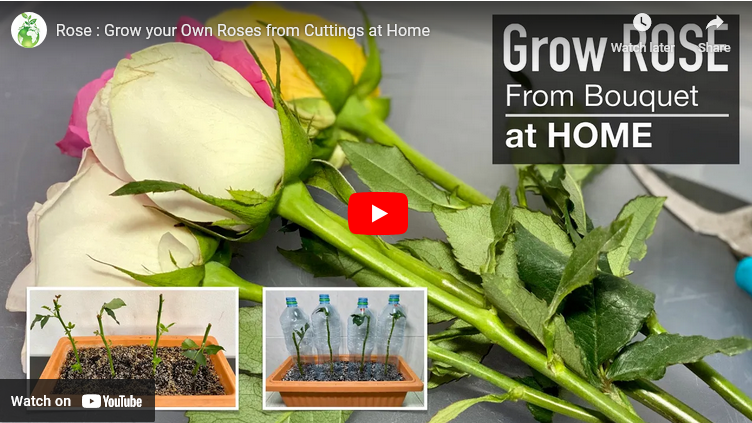
Growing a new rose from a cutting is a simple garden project. You take a healthy stem from a rose you like. Then you help that stem grow its own roots. With a little care, one plant can give you several new roses.
You do not need fancy gear. Clean pruners, a small pot, fresh potting mix, and a clear cover are enough for most home growers. The key is to start with a healthy stem and keep it moist without leaving it wet.
Many roses can grow on their own roots from stem cuttings. Results vary by rose type and season. Some cuttings root fast. Others take much longer. Starting several cuttings at once gives you a better chance of success.
Pick a stem with healthy leaves and no clear sign of pests or disease. A piece about 4 to 8 inches long is a useful size for many rose cuttings. Make the cut with a sharp, clean tool. Remove the flower or bud so the cutting can put more energy into roots.
Remove the leaves from the lower part of the stem. Keep a few healthy leaves near the top. Make the lower cut near a node. A node is the spot where a leaf or bud joins the stem. Roots often form near these points.
You can try rooting a rose in water, but a clean, moist rooting mix is often easier to manage. It supports the stem while roots form. It also makes the move into a pot less stressful because the young roots already grow in a solid medium.
Prepare the Rose Cutting
Choose a vigorous stem. Avoid weak, damaged, or spotted growth. Mississippi State University Extension notes that roses are commonly propagated by cuttings and that many roses root with relative ease. Its rose propagation guide recommends clean cuts with sharp tools and cuttings about 6 to 8 inches long.
Clean tools matter because a fresh cut is an open wound. If you need a new pair, a basic set of bypass pruning shears is useful for roses and many other garden jobs. Make a smooth cut instead of crushing the stem.
Root the Cutting in Potting Mix
Fill a small pot with a light, clean rooting mix. Water it first and let extra water drain. Make a hole with a pencil. This keeps the stem from being scraped as you place it in the mix. Rooting hormone is optional, but it may help some cuttings root more evenly. You can compare common rooting hormone products if you want to use one.
Set one or two lower nodes below the surface. Press the mix gently around the stem. Keep the leaves above the mix. Then place the pot in bright light but out of harsh midday sun. A loose clear bag over the pot can help hold humidity. Keep the plastic from resting on the leaves.
Do not keep the pot soaked. Wet soil can cause rot and can also invite pests. If small flies begin to hover around damp pots, our guide to controlling fungus gnats explains how to manage the moisture and larvae.
Give Roots Time to Grow
Be patient. A cutting can stay green for a while before it has enough roots to move. Do not pull it up each day to look. After several weeks, give the stem a very light tug. Gentle resistance can be a sign that roots are forming.
When the cutting has a useful root system, move it into a small pot with fresh mix. Water it well, then let it drain. Keep the young rose in a sheltered spot while it adjusts. Increase sun slowly instead of moving a tender plant straight into a hot garden.
The same basic skills work with many plants. Our DIY herb garden guide also covers simple cuttings, while the home gardening guide for beginners can help with soil, watering, and other basics.
Care for the Young Rose
A new rose needs steady care, not heavy feeding. Give it good light, regular water, and room for air to move around the leaves. Wait until the plant is growing well before you push it with fertilizer. A small root system can be damaged by too much salt from strong fertilizer.
If you enjoy collecting and caring for unusual plants, Plant Hoarder offers another place to explore plant-growing ideas. The same habit helps with roses: look closely, make small changes, and give the plant time to respond.
A Simple Way to Make More Roses
Rose propagation does not need to be complicated. Start with a healthy stem. Use clean tools. Root it in a light, moist mix. Keep it humid but not soggy. Then wait for a good root system before you transplant it.
Not every cutting will root, and that is normal. Take a few cuttings, keep the process simple, and learn from each batch. When one takes hold and begins to grow, you have a new rose made from a plant you already know and enjoy.