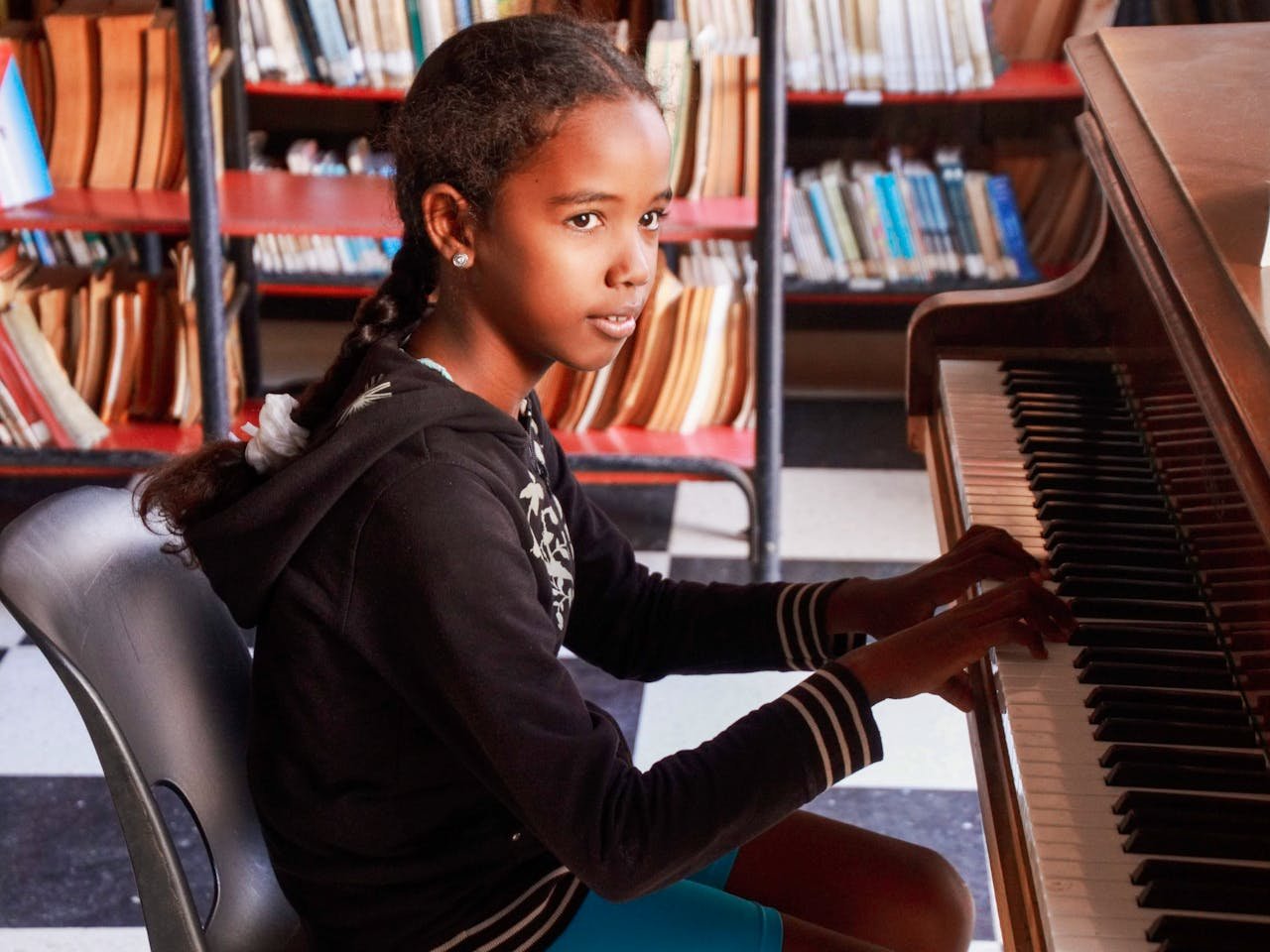
Learning piano can feel big at first. There are many keys, new words, and two hands to manage. The good news is that you do not need to learn it all at once.
A good beginner lesson starts small. Learn where a few notes are. Sit well. Play a short pattern. Then repeat it until it feels easy.
Video lessons can make this easier. You can pause a lesson, watch a hand move, and replay a hard part. That gives you time to learn at your own pace.
Short practice also helps. Ten calm minutes can be better than a long session when you are tired. The goal is to return often and build one skill at a time.
Do not rush to play fast. A slow and clean pattern teaches your hands more than a fast and messy one. Speed can come later.
Most of all, listen. Piano is not only about pressing the right keys. Notice the sound, the beat, and how each note connects to the next.
Start With a Comfortable Setup
Set the bench so you can sit tall without feeling stiff. Keep your shoulders loose. Let your hands rest in a natural shape. Baylor Piano Basics shows beginners how a relaxed, gently curved hand can be brought to the keys without changing its natural shape.
If you use a digital piano, place it at a height that lets your arms feel easy. A simple adjustable piano bench can help you find a better playing height.
Learn a Few Notes First
Find middle C. Then learn the nearby white keys. You do not need to memorize the whole keyboard on day one. Look for the groups of two and three black keys. They make useful landmarks.
This is a good place to use short lessons. The same idea makes micro-tutorials useful for learning: one small task is easier to see, repeat, and remember.
Practice Rhythm Before Speed
Tap the beat before you play. Count slowly. Then play the notes while keeping the same pulse. If the beat falls apart, slow down again.
A simple digital metronome can give you a steady beat. Start at a pace that feels easy. Raise the speed only when the notes stay clean.
Use Video as a Teacher, Not a Race
Watch a short part of a lesson. Stop the video. Copy the move. Then try it without looking at the screen. This turns watching into practice.
That gap between seeing a skill and doing it matters. The lesson from the Backwards Brain Bicycle is useful here: knowing the rule is not the same as training your body to do it.
If you want another simple view of the first lesson, this first piano lesson guide from Tuars covers the keyboard, posture, simple songs, and a basic practice plan.
Build a Small Practice Routine
Begin with a minute of relaxed setup. Play a five-note pattern. Work on one short part of a song. End by playing something you enjoy.
Record yourself once in a while. You may hear uneven notes that you missed while playing. Video can also show tense shoulders or hands.
Clear visual teaching can make hard ideas feel simple. Our look at 3Blue1Brown’s visual lessons explains why good pacing and pictures can help a learner follow a new idea.
Keep the First Weeks Simple
You do not need a huge course or a hard song to begin. You need a few clear lessons and time to repeat them.
Sit well. Learn a few notes. Keep a steady beat. Practice slowly. Then come back tomorrow. Small sessions can turn strange keys into familiar ground.