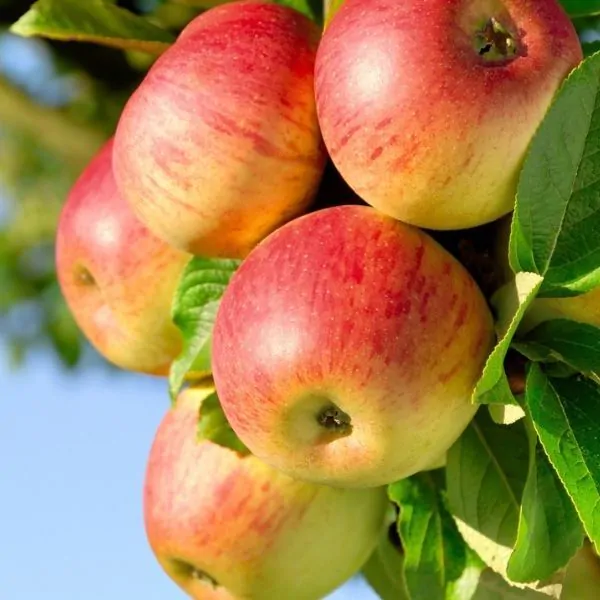
Honeycrisp is famous for a crisp bite and lots of juice. The fruit has a sweet taste with a light tart edge. It is a good apple for fresh eating.
The tree was developed by the University of Minnesota. It was bred for cold areas. That does not mean it is the best apple for every yard. Your winter chill, summer heat, soil, and disease pressure all matter.
Give a Honeycrisp tree a sunny site with soil that drains well. Avoid low spots that stay wet. Good air flow also helps leaves dry after rain.
Plan for pollination before you plant. Honeycrisp needs pollen from another compatible apple or crabapple that blooms at the same time. Two suitable trees nearby can give you a better chance of a good crop.
Young apple trees need steady care. Water them during dry weather. Keep grass and weeds away from the trunk. Add mulch over the root zone, but do not pile it against the bark.
Honeycrisp can reward good care with excellent fruit, but it is not a plant-and-forget tree. Pruning, fruit thinning, pest checks, and careful harvest all help. Start with a sound tree and keep the routine simple.
Pick the Right Place
Full sun is best. Give the tree room to grow to the size set by its rootstock. If you live in the South, climate fit is very important. Our guide to planting apple trees in Alabama explains why local timing and variety choice matter.
Honeycrisp was bred for a colder climate. Warm-winter growers should check local chill needs before buying one. For a look at an apple bred for lower-chill areas, Plant Hoarder has a guide to the Dorsett Golden apple tree.
Give It a Pollination Partner
Do not count on one Honeycrisp tree by itself. Plant a compatible apple or crabapple that flowers at the same time. Bees then move pollen between the blooms. Good bloom overlap is more useful than simply picking any second apple tree.
Leave enough space for each mature tree. Rootstock controls much of the final size. Read the nursery label before planting. A dwarf tree may also need permanent support.
Water and Mulch Young Trees
Water deeply when the soil starts to dry. New trees need more help than old trees with wide root systems. A soaker hose can make slow watering easier.
Keep a wide ring around the trunk free of grass. Mulch can hold moisture and reduce weeds. Keep the mulch a few inches away from the trunk so the bark stays dry.
Prune for Light and Air
Prune while the tree is dormant. Remove dead, broken, rubbing, and badly placed branches. The goal is a strong tree with light and air through the canopy. Our simple pruning guide explains the basic cuts.
Use clean, sharp tools. A pair of bypass pruning shears works well for small live branches. Do not remove too much of a young tree at one time.
Thin Heavy Crops
Apple trees can set more fruit than they can carry well. Thin crowded fruit while it is small. This gives the apples that remain more room. It can also reduce stress on branches.
Honeycrisp trees can also show mottled yellow leaves called Honeycrisp leaf mottle. It can look alarming, but it does not always mean the fruit is harmed. The University of Minnesota Extension also lists Honeycrisp as resistant to apple scab. Watch the whole tree before you assume every leaf spot has the same cause.
Harvest at the Right Time
Do not judge ripeness by red color alone. Taste a fruit and check how easily it comes free with a gentle lift and twist. Harvest can stretch over more than one picking because all apples may not ripen on the same day.
Handle the apples gently. Bruises shorten storage life. Cool sound fruit soon after harvest. Keep damaged apples separate and use them first.
Match the Tree to Your Climate
A good apple tree starts with the right climate match. Cold hardiness is only one part of that choice. Winter chill and summer heat matter too. Our planting-zone guide explains why a USDA zone is useful but does not tell the whole story.
Honeycrisp is a fine apple when the site fits it. Give the tree sun, a pollination partner, steady water, and yearly care. Then let the fruit ripen fully and enjoy the crisp bite that made Honeycrisp famous.