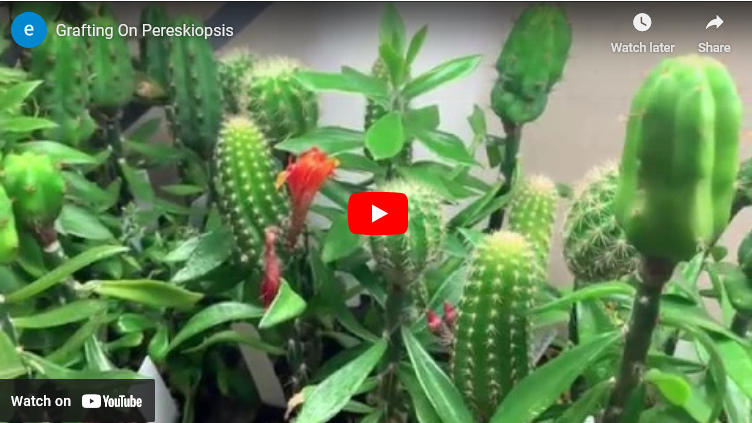
Grafting a tiny cactus onto Pereskiopsis can make the young plant grow much faster. The method looks delicate, but the basic idea is simple.
You cut a healthy cactus seedling and place it on a fresh cut at the top of a healthy Pereskiopsis stem. The two cut surfaces then need to heal together.
The cactus on top is called the scion. The Pereskiopsis below it is the rootstock. The rootstock supplies water and nutrients while the scion keeps growing as the cactus you want.
Success depends more on clean work and good contact than on fancy gear. Use a sharp blade, healthy plants, and fresh cuts.
Pereskiopsis is especially useful for very small seedlings because its soft green growth is easy to cut. It also grows quickly when it is warm and actively growing.
Grafting is not magic, and every graft will not take. A careful first attempt can still teach you a lot about cactus growth and plant propagation.
What Grafting Does
Grafting joins parts from two plants so they grow together. University of Missouri Extension explains grafting as joining a scion to a rootstock and notes that good contact between the living tissues is important for a strong union.
The rootstock does not turn the scion into a different cactus. It simply supports it. That is useful when a small seedling would otherwise take a long time to gain size.
If you are new to these plants, our simple succulent care guide is a useful companion because light, drainage, and careful watering still matter after a graft succeeds.
What You Need
You need a healthy Pereskiopsis plant, a small cactus seedling, and a very sharp blade. A clean precision grafting knife or razor makes it easier to make one smooth cut.
Clean the blade before you start and again between plants. Keep your work area tidy. A fresh cut can dry quickly, so have both plants ready before making the final cuts.
How to Make the Graft
Cut the top from the Pereskiopsis stem with one clean, level slice. Then cut the base from the cactus seedling. Place the seedling on the fresh rootstock cut right away.
Centering can work when both pieces are very small. If their cut surfaces differ in size, shift the scion slightly so the living rings or vascular tissue have a better chance to cross.
Use gentle pressure to keep the pieces in contact while they begin to join. Small grafts may be held by light pressure rather than heavy wrapping. Do not crush the seedling.
This is different from rooting a normal cutting. For comparison, our rose cutting propagation guide shows how a stem can make its own roots instead of being joined to a rootstock.
Care After Grafting
Keep the new graft warm and bright, but avoid harsh sun while the cut is fresh. Do not soak the plant. Give the union time to settle before handling it often.
Watch the scion over the next several days. A firm scion that stays in place is encouraging. A scion that shrivels, slips off, or turns soft may mean the graft did not take.
A small LED grow light for succulents can help when indoor light is weak. Increase light gradually instead of moving a tender graft straight into intense sun.
Keep the Rootstock Healthy
Pereskiopsis needs active growth to do its job well. Give it warmth, useful light, and sensible watering. Remove unwanted shoots from below the graft so the rootstock puts more energy into the scion.
Good plant hygiene matters too. Our fungus gnat guide explains why constantly wet potting mix can create avoidable problems around indoor plants.
For another practical look at unusual succulents, Plant Hoarder is a useful place to explore plant collections and care ideas beyond the common garden-center choices.
Practice Makes Grafting Easier
Your first graft may fail. That is normal. Try again with healthy material, cleaner cuts, and faster placement. Small changes in technique can make a big difference.
Once the union is growing well, you can enjoy the faster growth or later move the cactus to another rootstock. The main goal is simple: keep both plants healthy and give the fresh graft the best chance to join.