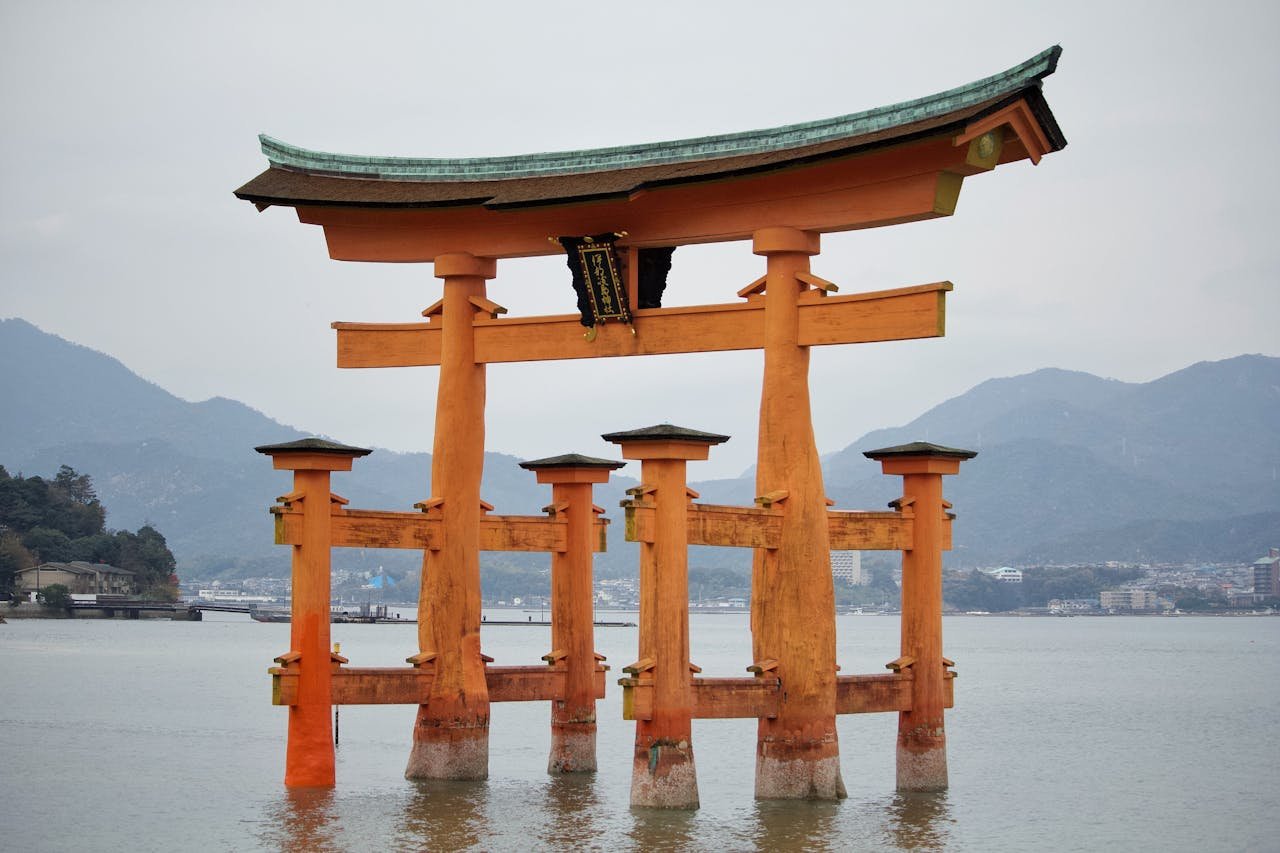
Japan has a long story. It includes old clans, court life, warriors, trade, war, reform, and fast change. No short guide can cover it all. Still, a clear timeline can show how the main pieces fit together.
The story does not begin with one neat date. People lived on the Japanese islands long before written records. Over time, farming spread, larger communities formed, and powerful families began to rule wider areas.
Japan also learned from its neighbors. Ideas, writing, religion, art, and forms of government came from Korea and China. Japan adopted many of these things, then changed them to fit local life.
For many centuries, emperors remained important symbols. Yet real political power often sat elsewhere. Court families, military leaders, shoguns, and regional lords all held power at different times.
That helps explain why Japanese history can feel complex. The country had both an imperial line and long periods of warrior government. Those systems could overlap instead of simply replacing one another.
The video below gives a fast tour of this huge subject. After it, we can slow down and look at the main eras, from early Japan to the modern state.
Early Japan and the Yamato Court
Japan’s oldest chronicles mix history with myth. They tell stories about the sun goddess Amaterasu and Emperor Jimmu. These stories became important parts of imperial tradition. Historians do not treat the early dates in those stories as a modern factual timeline.
By the first centuries CE, strong political centers had formed. The Yamato court grew in power in central Japan. Large burial mounds from the Kofun era show that elite rulers could command great labor and resources.
Buddhism reached Japan by way of the Asian mainland in the sixth century. Chinese writing and state ideas also had a deep effect. Rulers used these tools as they built a more organized court and government.
Nara and Heian Court Culture
Nara became the permanent capital in 710. The court backed Buddhist temples and a stronger central state. In 794, the capital moved to Heian-kyo, the city now called Kyoto.
The Heian court became famous for poetry, art, dress, and literature. Murasaki Shikibu wrote The Tale of Genji in this world. It remains one of the best-known works of classical Japanese writing.
Power outside the capital was changing too. Landholding and local military strength grew. Warrior families became more important. This shift set the stage for the age of the samurai.
Samurai and the First Shogunate
War between the Taira and Minamoto clans ended with a Minamoto victory in the late 12th century. Minamoto no Yoritomo built a military government at Kamakura. The emperor and court remained in Kyoto, but the shogunate held major political power.
Japan faced two Mongol invasion attempts in 1274 and 1281. Japanese defenders fought both attacks. Storms also damaged the invading fleets, especially during the second invasion. Later stories gave these winds the famous name kamikaze, or divine wind.
The Kamakura government later fell. The Ashikaga shogunate rose in the 14th century. It ruled from Kyoto, but its control over the country was often weak. Regional military lords gained more room to act on their own.
Warring States and Unification
By the late 1400s, Japan entered a long age of civil war. This is often called the Sengoku, or Warring States, period. Daimyo fought for land, allies, and power.
Three leaders are tied closely to reunification. Oda Nobunaga broke the power of many rivals. Toyotomi Hideyoshi carried that work further and brought most of Japan under one rule. Tokugawa Ieyasu then won the Battle of Sekigahara in 1600.
This long warrior age is one reason samurai history still draws so much interest. Readers who enjoy seeing how military societies changed can also compare Japan’s story with FootageVault’s look at the Comanche attack on Mission San Sabá, where power on another frontier also shaped the fate of states and settlements.
The Tokugawa Era
Tokugawa Ieyasu became shogun in 1603. His government ruled from Edo, now Tokyo. The Tokugawa system brought a long period of internal peace, but it also placed strict controls on regional lords and social life.
Japan was not fully sealed from the world. The shogunate tightly controlled foreign contact. Trade and knowledge still moved through approved channels, including Dutch and Chinese trade at Nagasaki.
Peace helped cities and commerce grow. Kabuki theater, woodblock prints, haiku, books, and popular entertainment reached large urban audiences. Samurai remained a formal warrior class, even though many spent more time in government work than on battlefields.
The Meiji Restoration Changes Japan
Foreign pressure grew in the 1800s. Commodore Matthew Perry arrived with U.S. ships in 1853. New treaties opened ports and added to a political crisis inside Japan.
In 1868, imperial government was restored and the Tokugawa shogunate ended. The change is known as the Meiji Restoration. Japan then moved quickly to remake its government, military, schools, industry, and transport system. A Library of Congress account of the Iwakura Mission shows how Japanese leaders traveled through the United States and Europe to study institutions and technology that might help the new state.
The change was not only about copying the West. Japanese leaders chose, adapted, and combined outside ideas with local goals. The old domains were replaced by prefectures. A national army formed. Railways, factories, schools, and new state offices spread.
Japan also became an imperial power. It fought China in 1894–95 and Russia in 1904–05. Japan later annexed Korea in 1910. Its empire brought harsh colonial rule to millions of people across Asia.
War, Empire, and Defeat
Japan’s party politics grew during parts of the early 20th century. Yet military influence also became stronger. Japan seized Manchuria in 1931 and began a wider war in China in 1937.
The attack on Pearl Harbor on December 7, 1941, brought the United States into the Pacific War. Fighting spread across a vast area. The conflict caused enormous loss among soldiers and civilians throughout Asia and the Pacific.
FootageVault’s guide to the Battle of Midway looks closely at one key 1942 carrier battle. Our article on OverSimplified’s World War II video also shows how a huge global conflict can be explained through a clear cause-and-effect story.
Japan surrendered in August 1945 after years of war, the atomic bombings of Hiroshima and Nagasaki, and the Soviet entry into the war against Japan. The formal surrender took place on September 2, 1945.
Postwar Japan
Allied occupation brought major change after the war. Japan adopted a new constitution that took effect in 1947. It created a parliamentary democracy and included Article 9, which renounced war as a sovereign right of the nation.
Japan then saw remarkable economic growth. Cars, electronics, machinery, and other exports became known around the world. Cities expanded, living standards rose, and Japan became one of the world’s largest economies.
Modern Japan also carries its older culture forward. Temples, shrines, festivals, crafts, food, literature, and historic places sit beside high-speed rail and dense modern cities. Travelers who want to see that mix in person may find the Tokyo section in this family travel guide from Tuars useful when thinking about a future trip.
A Good Way to Keep Learning
Japan’s history makes more sense when you follow change over time. Start with the court. Then follow the rise of warriors, the Tokugawa peace, the Meiji reforms, empire, war, defeat, and postwar growth. Each era grew from what came before it.
A broad history book can help fill the gaps that a short article must leave out. You can browse general histories of Japan on Amazon. Readers more interested in the warrior era can browse samurai history books on Amazon.
The main lesson is simple. Japan did not move in a straight line from ancient tradition to modern technology. Its history is a long series of choices, conflicts, outside contacts, and local changes. That is what makes the story worth studying.