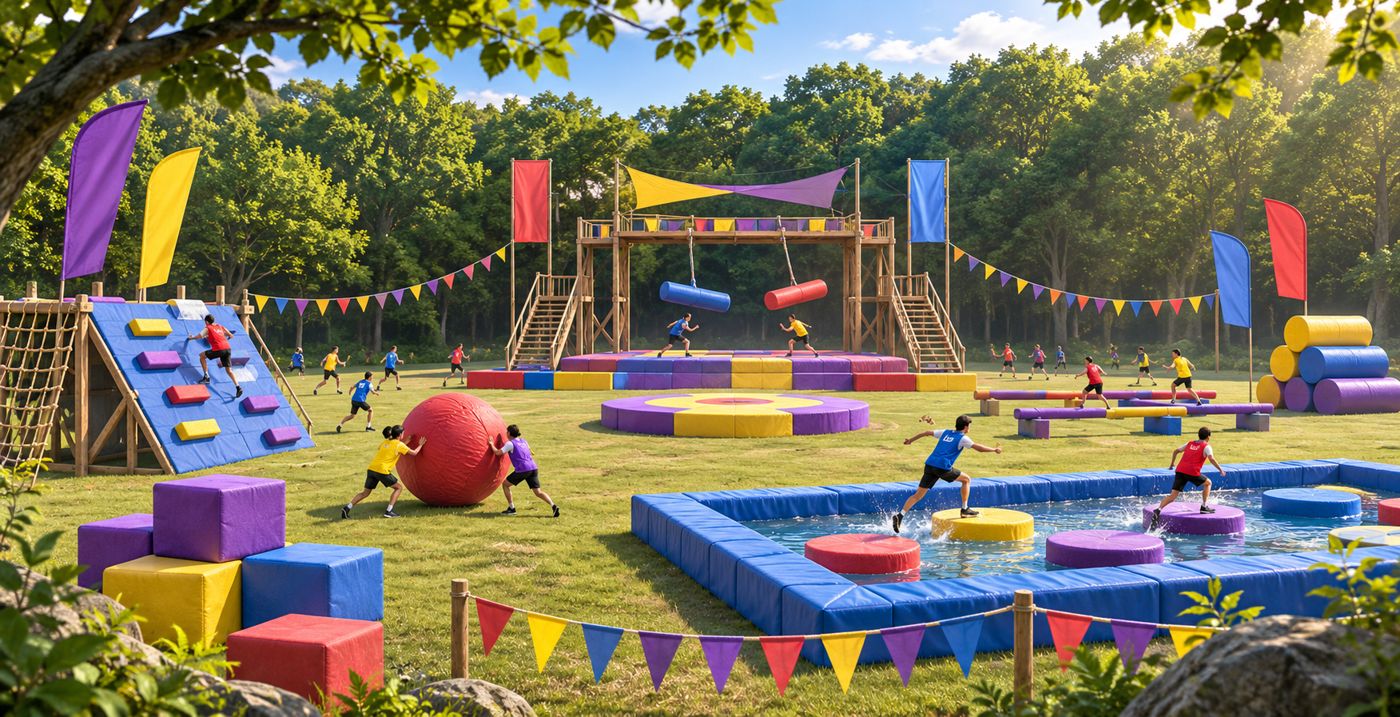
A big prize. A clear goal. A game with teams. That is a simple pitch for a video. MrBeast’s “$250,000 Hunger Games In Real Life” takes that pitch and turns it into a large online show.
The video went up on 14 November 2026. Its description says 12 teams enter an arena for a shot at the prize. By 23 November, public trackers showed tens of millions of views. Counts change, but many people chose to watch.
Why the premise is easy to grasp
The title tells viewers three things fast: there is a game, it draws on a well-known fictional idea and there is a prize. You do not need to read a long guide before you decide whether to watch.
That makes the idea easy to grasp. A good premise can fit in a single sentence. It tells us who is taking part, what they want and why we might care about the result.
The name brings a well-known story to mind. It does not tell us every rule of this game. The show still needs to explain what players can do and when they must leave.
A team game gives the story more than one path
With 12 teams, a viewer can watch for more than the final winner. Teams must choose whom to trust and where to move. They must react as the game changes. Those choices can create small stories inside the larger one.
A short final cut cannot show every minute from every angle. The order of scenes shapes what we see. A clear edit helps us track people and the stakes. It also gives each key moment room to make sense.
That is a lesson for a small creator too. You do not need a large arena. You do need to know which person the scene follows, what that person is trying to do and what the viewer needs to see next.
Scale is more than a large set
A big show has more moving parts than we see. Cameras, sound, crew and safety all need a plan. So do the care of players and the right to use a site. A shot on screen is the result of work before and after the shoot.
A small team should not copy a risky stunt for the camera. Build a game around the skills, space and people you have. If there is a risk of harm, get expert help. Put the safety plan first.
Our look at Mark Rober’s board-game video makes a related point. A clear goal gives us a reason to watch each step.
Sound, pace and a place to breathe
Fast cuts can raise energy. They can also make a game hard to follow if the viewer loses track of the rules. A good editor can hold on a face or a choice long enough for us to understand why the next moment matters.
Sound can guide our attention, but it should not have to do all the work. If the picture and the words are unclear without loud music, the story may need a simpler setup. Test a rough cut with someone who was not at the shoot.
Ask that person to describe the goal in their own words. Ask where they got lost. Their answer may show a gap that the creator no longer notices after watching the footage all day.
Watch the MrBeast video below. The set and game belong to the team that made them. Here, we look at how the premise can draw viewers in.
What small creators can take from it
Start with one goal the viewer can name. Show the person who wants it. Explain the key rule before the rule decides an outcome. Then make sure each scene gives the viewer new information.
A backyard art contest, a cook-off or a board-game night can use that same structure. The scale is not the lesson. The lesson is to make the goal and the change in each scene easy to see.
Keep notes as you film. Write down the names of clips, the people who appear and any sound you have permission to use. A plain production notebook can help keep the plan in one place. As an Amazon Associate, we may earn from qualifying purchases.
Check the rights before you use someone else’s clips, music or art. YouTube’s copyright guidance is a useful starting point. Giving credit alone does not grant permission.
Before the shoot, write the goal on a card. If the cast cannot state it in one sentence, the rules may need work. Ask a friend who is new to the game to read them. Note each place where they pause or ask a question.
After the shoot, sort clips by the part of the story they show. Keep the source files as well as the finished cut. If you need to fix a name or make a short clip later, you will not have to start from scratch.
Do not spoil the end in the title if the draw is seeing who wins. Give people a fair sense of the game, then let the film answer the main question. A title can be clear without giving away each turn.
Think beyond the view count
A large view count shows that people chose to watch. It does not by itself tell us which scene worked, how much each person watched or whether a new creator can repeat that result.
Ask what you can test in your own work. Does a short setup help? Can a first-time viewer follow the teams? Does a clear end make the whole story feel complete? Try one change, then ask for feedback.
WrightHost’s guide to search traffic and useful posts has a related point. A good title should lead to a page that keeps its promise.
We do not need the same budget to learn from a hit. A clear idea and a story people can follow can work on a small scale too.