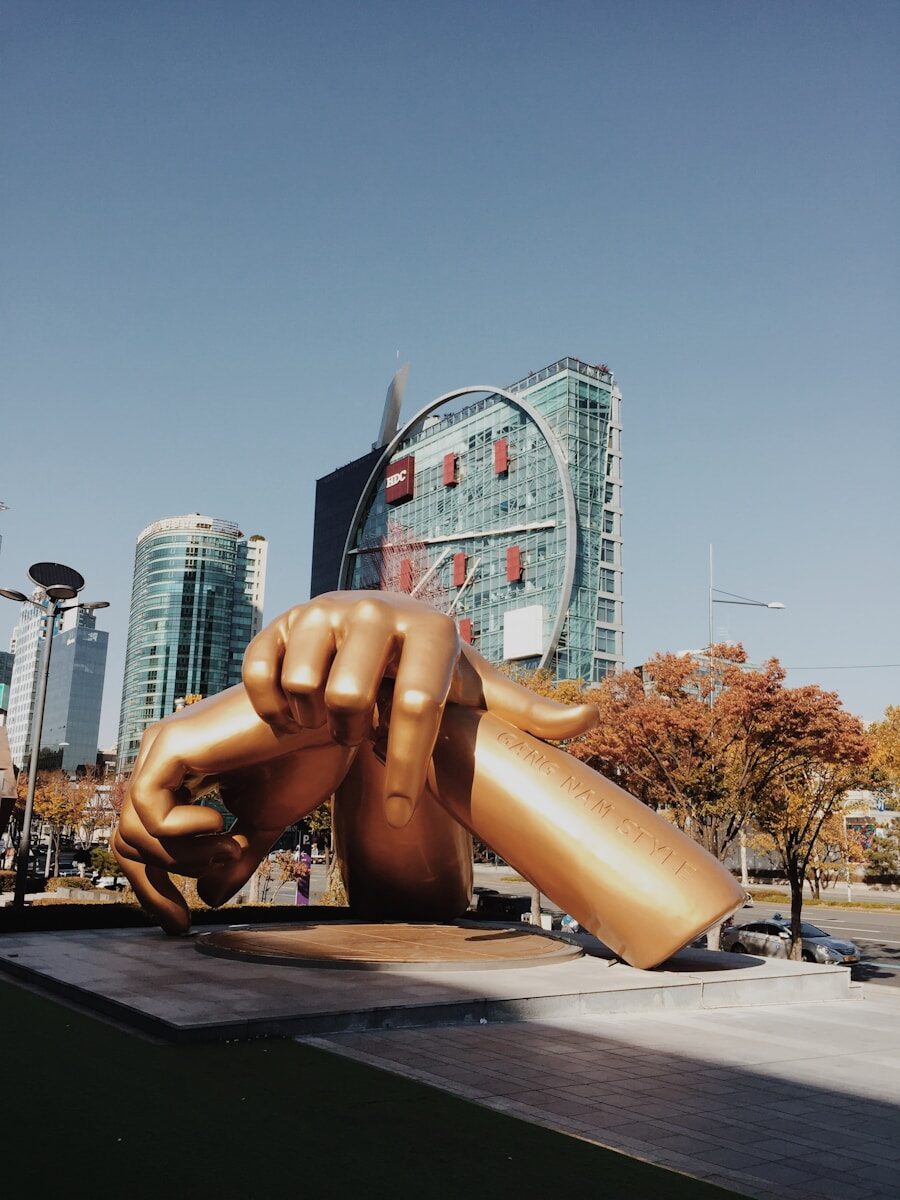
PSY’s “Gangnam Style” still feels alive because the idea is easy to get.
The beat is fast. The jokes are big. The dance is simple. The video never asks us to study it first.
We can just watch and join in.
That was a big part of its power in 2012.
The song came out on YouTube on July 15, 2012. Five months later, it became the first video on the site to pass one billion views.
That was a huge web moment.
A Video Built Around One Clear Joke
Before that, one billion views felt hard to picture. “Gangnam Style” made the number real.
The video starts with a joke. PSY looks rich and cool, but the scene undercuts him. That trick keeps going.
He dances near horses. He rides an elevator. He moves through a bus, a subway, and other bright scenes.
The shots are fast. The mood is silly. Yet the video is easy to follow.
That is good visual work.
Why the Horse Dance Spread
The famous horse dance helped even more.
The move is not hard to read. Cross the wrists. Bounce the legs. Swing one arm.
People could copy it at home, at school, at work, or at a party.
That made the video more than a thing to watch.
It became a thing to do.
That is one reason it spread so far.
A Korean Song Became a Global Hit
The song also crossed a big language line.
Most of the lyrics are in Korean. Yet people all over the world watched it, shared it, and copied the dance.
The video did not need a long speech to explain the joke.
The beat, faces, moves, and cuts did much of the work.
That same sense of place also helps “Despacito” feel local and global at once.
The One-Billion-View Milestone
A clear visual idea can travel very far.
Guinness World Records says “Gangnam Style” passed one billion views on December 21, 2012.
It took just 159 days from upload to that mark.
Later, the view count grew so high that it became part of a story about YouTube’s counter system.
That sounds like a small tech fact.
It is not.
It shows the scale of the hit.
Why It Still Feels Easy to Remember
The video was not just popular in one place. It became a shared web event.
That kind of shared event is harder to find now.
Today we have more feeds, more apps, and more short clips.
A dance can be huge for a few days. Then the next trend takes its place.
“Gangnam Style” had more room to stay in our minds.
It had a clear look. It had a clear dance. It had a clear star. It also had a full music video with many scenes.
That gave people more to recall.
A very different song video, “See You Again,” lasts through a clear feeling and strong visual memory.
What Creators Can Learn
The video also used contrast well.
PSY acts proud, then looks silly.
A sharp suit meets a goofy dance.
A rich look meets odd places.
Those flips keep the joke moving.
Video makers can learn from that.
Give the viewer one thing to remember.
Make the first idea easy to see.
Use clear scenes.
Let the joke or goal grow.
Do not make the viewer work too hard.
That same clear hook helps a big challenge video too, as seen in MrBeast’s $1 million Ronaldo challenge.
Local Style Can Travel
Simple does not mean dull.
It means the viewer always knows where to look.
“Gangnam Style” also shows why local style can go global.
The video did not hide South Korea.
It used a place, a joke, and a style with its own feel.
That made it stand out.
Creators do not always need to sand off what makes a video local.
At times, that local feel is the hook.
The same idea matters on the publishing side. A content-first media site needs to give strong video and stories a clear frame.
Fans can also find PSY and “Gangnam Style” music and merchandise online if they want a small piece of that era.
Why the Video Still Matters
But the real thing worth saving is the lesson.
Joy travels.
A strong image travels.
A move people can copy travels.
And a video that knows exactly what it is can last much longer than one trend.
That is why “Gangnam Style” still belongs in the story of YouTube.
It did not just get views.
It helped show what a global video could be.