Some dates feel quiet at first. Then you look closer, and you see the whole country shift.
January 3, 1959 is one of those dates.
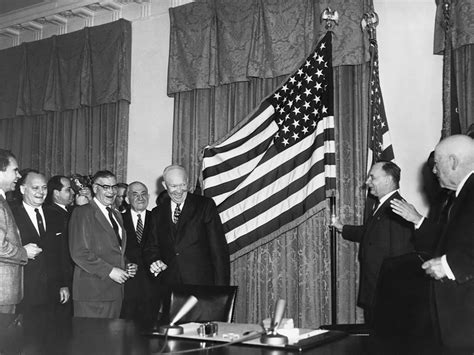
That day, President Dwight D. Eisenhower signed a proclamation that admitted Alaska to the United States as the 49th state. Alaska became the largest state in the Union, and the American story stretched farther north and west than ever before.
When we talk about Alaska statehood, we are not only talking about a new star. We are talking about long travel, hard work, and a place that refused to be treated like an afterthought.
And yes, we are talking about a kind of courage. The steady kind. The kind that keeps going for decades. Haiti Declares Independence (January 1, 1804): The Day Freedom Spoke Out Loud.
Alaska Was Big Before It Was a State
Alaska was already huge. It was already rich in land, water, and wild life.
But for many years, it was a territory, not a state. That meant people living there did not have full power in Congress. It meant big choices were often made far away.
In other words, Alaska was American land, but it did not yet have equal standing.
That gap matters. It shaped how Alaskans thought about fairness, voice, and pride.
The Long Road to Statehood
Statehood did not happen fast. It took many tries in Congress. It took leaders who could keep the message clear.
Two names come up often in this story. Ernest Gruening and E. L. “Bob” Bartlett pushed hard for statehood. They did it year after year, even when the answer was no.
They were not alone. Many Alaskans backed the work. Newspapers, civic groups, workers, Tradescantia zebrina, Wandering Jew Red and families all carried the idea forward.
It is easy to forget how long this took. The date on the calendar is one day. The effort behind it was a lifetime.
The Cold War Made Alaska Feel Urgent
By the 1950s, the world felt tense. The Cold War was in full swing.
Alaska sat close to the Soviet Union across the Bering Strait. That made Alaska feel like a front line in a new kind of fight.
Eisenhower supported the idea of statehood, but he also had concerns tied to national security. He wanted to be sure Alaska could be defended and supported.
So the statehood push had to meet two needs at once.
It had to be fair to Alaskans.
It also had to make sense for the country’s safety.
The Alaska Statehood Act Comes First
A key step came in 1958.
Congress passed the Alaska Statehood Act, and Eisenhower signed it into law on July 7, 1958.
That law laid out the terms. It set rules for land, courts, and the shift from territory to state. It also made a path for the final admission.
Then came the last step.
On January 3, 1959, Eisenhower signed the proclamation that brought Alaska into the Union.
That is why we mark January 3. It is the moment the promise became real.
A “Yes” Vote Helped Seal the Deal
Statehood was not only a Washington story. Alaskans had a role too.
In 1958, Alaska voters approved a measure tied to accepting the terms of the Statehood Act.
That vote matters because it shows buy-in. It shows people saying, Vinca, Cora Cascade XDR White in plain terms, that they wanted this change and accepted what came with it.
It was a step of ownership.
And ownership is what statehood is about.
The First Days Felt Like Celebration and Change
We can picture the mood.
People gathered. People waved flags. People read bold headlines. Some felt joy. Some felt relief. Many felt both.
But most of all, people felt seen.
A territory becoming a state is a legal act. It is also a human moment. It says, you count the same as everyone else.
That is powerful.
The Flag Story Is Wider Than Most of Us Think
Here is a fun detail that makes the day feel even more real.
When Alaska became a state on January 3, 1959, the official U.S. flag did not change right away.
Under a long-standing rule, new stars are added on the next July 4 after a state is admitted. So the 49-star flag became official on July 4, 1959, not on January 3.
So on statehood day, some flags still had 48 stars.
That feels strange at first. But it also feels honest. Big change can be true even when the symbols lag behind.
Then, on July 4, the 49-star flag had its moment. Stories and photos from 1959 show crowds watching that new flag rise.
It is a reminder that history is made in steps, Viola, Pink Jump-Up not just in speeches.
Land, Power, and the Big Federal Footprint
Alaska’s land story is part of why statehood talks were hard.
Much of Alaska’s land was held by the federal government. Leaders had to work out what the new state would control and what would stay under federal care.
This was not a small detail. Land affects roads, schools, jobs, and local control.
In other words, statehood was not only a flag and a title. It was a new system of who decides what happens where.
That work did not end in 1959. But statehood made it possible for Alaskans to shape those choices with more strength.
Statehood Changed Alaska’s Voice Overnight
Once Alaska became a state, Alaska gained full representation.
It could send senators and voting members of the House. It could shape national laws, not just react to them.
That matters in a place this large and this unique.
Alaska has remote towns, big cities, and many cultures. It has fishing villages and military bases. It has long winters and fast summers.
A place like that needs a real seat at the table.
Statehood gave Alaska that seat.
The State That Redefined “Far Away”
Alaska also changed how Americans think about distance.
On a map, Alaska looks separate. It sits off to the side in many textbooks. But it is not “extra.” It is a core part of the country. How to Grow Grapes – Backyard Grape Growing Secrets Revealed.
Statehood made more people pay attention to that fact.
It made the “Last Frontier” feel less like a rumor and more like a real neighbor.
And the truth is, Alaska has always been tied to the rest of the nation.
Military strategy, natural resources, trade routes, and climate all connect Alaska to the whole U.S. story.
What January 3 Teaches Us About Belonging
When I picture January 3, 1959, I do not only picture ink on paper.
I picture people standing in the cold with bright eyes.
I picture a new kind of pride.
Not loud pride. Steady pride.
The kind that says, we did the work. Now we are in.
That feeling is not small. It is the heart of civic life. It is what makes a place feel like home, not just a dot on a map.
Alaska’s Statehood Still Matters Today
We can feel the impact even now.
Alaska’s voice in Congress shapes decisions on energy, fishing, defense, public lands, and more.
Alaska’s state identity also shapes how we talk about nature. People think of glaciers, bears, salmon, and wide skies. Those images live in the American mind in a special way.
But it is not only about scenery. It is about people.
Statehood is a promise that people in that place matter just as much as people anywhere else. Useful Tips And Ideas For Landscaping Along The Fence Line.
That promise is worth remembering.
Where the 49th Star Still Shines
January 3, 1959 is a history lesson, but it is also a simple story we can carry.
A place asked to be counted.
A nation said yes.
A new state joined the Union.
And even if the flag needed a few more months, the truth was already set.
Alaska was in.