Carnivorous plants look strange, but many are not hard to grow. The trick is to forget a few normal houseplant rules. These plants come from places where the soil is poor in nutrients. Their traps help them make up the difference.
Sundews, butterworts, pitcher plants, and Venus flytraps all catch small prey. They do it in different ways. Some use sticky leaves. Some use deep pitchers. A flytrap uses leaves that snap shut.
Indoor care starts with light and water. Most types need very bright light. They also need water with very few dissolved minerals. This is where many new growers go wrong.
Regular potting soil is another common problem. It is often too rich. Fertilizer can also hurt many carnivorous plants. A simple, low-nutrient mix is much safer.
Not every carnivorous plant wants the same care. A tropical pitcher plant is not the same as a temperate pitcher plant. Some plants also need a winter rest. It helps to know the type you have before you set up its pot.
The good news is that a small indoor collection can be simple. Start with one or two easy plants. Learn how they react to your light, water, and room conditions. Then add more as you gain confidence.
Start With Pure Water
Water quality matters a lot. Rainwater, distilled water, or other very low-mineral water is usually the safest choice. North Carolina Extension says Venus flytraps should be watered with rainwater or distilled water because hard or treated water can harm them. Its Venus flytrap guide also recommends wet, sandy, low-nutrient growing conditions.
If you are not sure about your water, a small TDS water meter can help you compare sources. It does not tell you everything in the water, but it can show when dissolved mineral levels are high.
Use the Right Growing Mix
Do not use normal houseplant soil unless the species guide clearly calls for it. Many bog species do well in sphagnum peat or long-fiber sphagnum mixed with perlite or coarse sand. The goal is a low-nutrient mix that stays moist while still holding air.
This is very different from the mix used for many dry indoor plants. Our succulent care guide shows the other side of container growing, where fast drainage and drying between waterings are often important.
A bag of long-fiber sphagnum moss is useful for many carnivorous plant setups. Check the needs of your exact plant before mixing or repotting.
Give Them Plenty of Light
Weak light often leads to weak traps and pale growth. A bright window may work for some plants. A grow light can make indoor care easier when natural light is limited.
Move slowly when you increase light. Watch the new growth instead of chasing one fixed distance from the lamp. Different lights have very different output. Heat, room temperature, and the plant species also matter.
Sundews Are a Good Place to Start
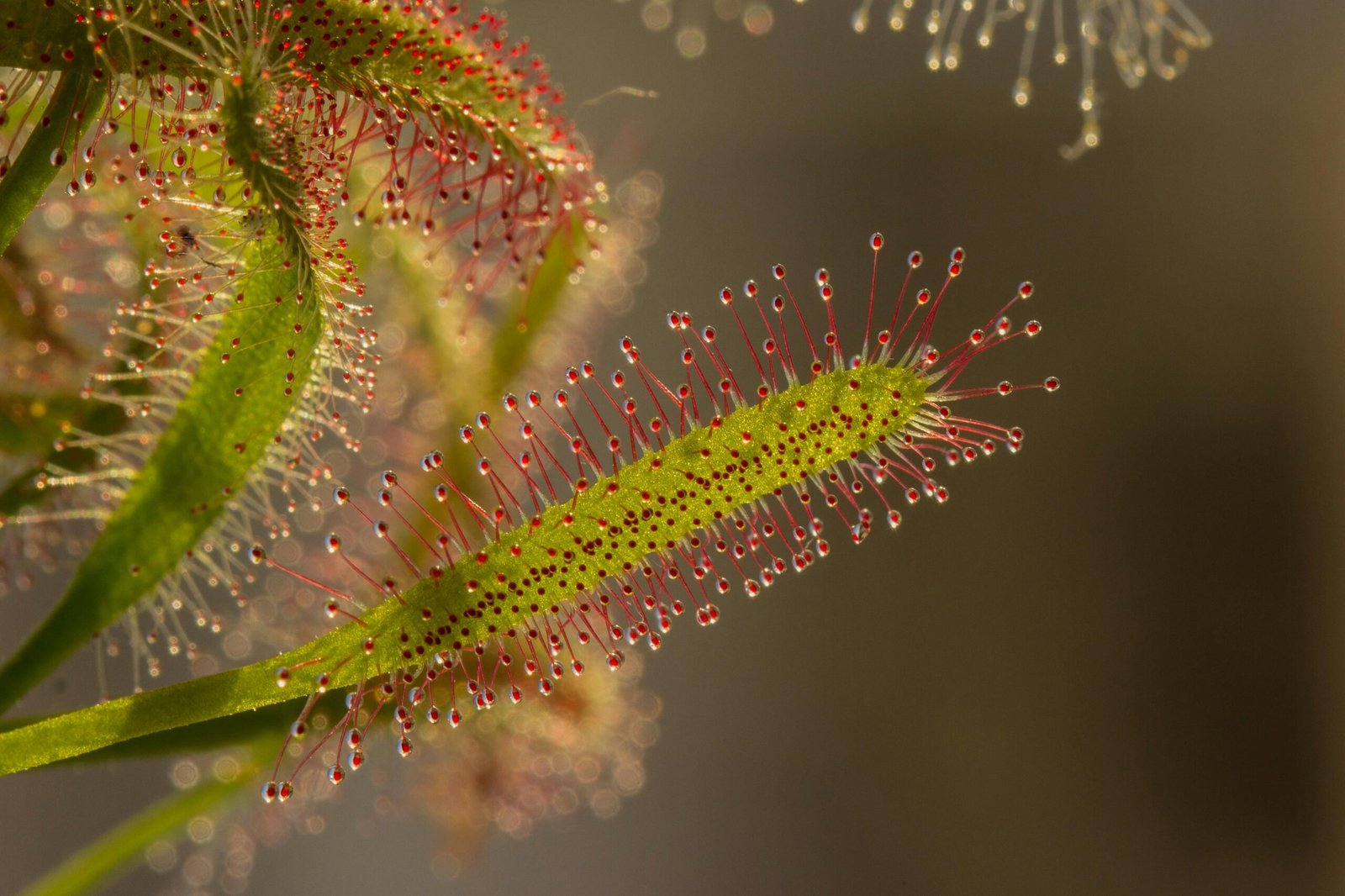
Sundews use sticky leaves to catch small insects. Many stay compact, so they fit well under lights. Give them strong light, pure water, and the right low-nutrient mix. Healthy plants often make clear drops of sticky mucilage on the leaves.
If you enjoy learning how unusual plants grow, our plant tissue culture guide is another look at plants that need careful control of water, media, light, and cleanliness.
Butterworts Need Species-Specific Care
Butterworts have smooth leaves with a sticky surface. They can be easy indoor plants, but the group is diverse. Tropical Mexican butterworts may have different seasonal needs from temperate species.
Do not assume every butterwort wants to sit in deep water all year. Learn the species or hybrid name when you can. Then match its moisture and seasonal care to that plant.
Pitcher Plants Are Not All Alike
Nepenthes are tropical pitcher plants. Many like bright light, warm rooms, airy media, and steady moisture. They should not be treated exactly like bog-growing Sarracenia.
Sarracenia are temperate plants. Many need strong sun and a winter dormancy. Trying to keep them warm and growing indoors all year can weaken them over time.
Carnivorous plants also show how wide plant care can be. A drought-tolerant plant such as the Bottle Cactus at Alabama Grown wants very different moisture and soil conditions. Matching care to the plant is more useful than following one houseplant rule.
Do Not Overfeed Them
You do not need to stuff traps with food. A plant with access to small insects can often catch what it needs. Never give traps meat or kitchen scraps. These plants are adapted to small prey, not human food.
Fertilizer is also risky. Many common carnivorous plants are adapted to poor soil. Too much fertilizer can damage roots or leaves. For a beginner, it is safer to focus on light, water, and the correct growing mix.
Keep the Setup Simple
You do not need a room full of equipment. Start with a suitable pot, pure water, the right media, and enough light. A timer can keep a grow light on a steady schedule.
Watch the plant. New traps, good color, and steady growth tell you more than a complicated gadget. If the plant declines, check water quality and light first. Then look at temperature, media, pests, and seasonal needs.
Growing from seed can be fun too, but some carnivorous plants have special germination needs. Our seed germination guide explains the basic ideas behind moisture, temperature, light, and seedling care.
A Small Collection Is Enough
Carnivorous plants reward careful observation. They do not need rich soil or heavy feeding. They need conditions that fit the way they evolved.
Start with an easy sundew, butterwort, or another plant suited to your home. Give it clean water and good light. Learn its rhythm. Once that plant is growing well, the rest of this unusual hobby becomes much easier.