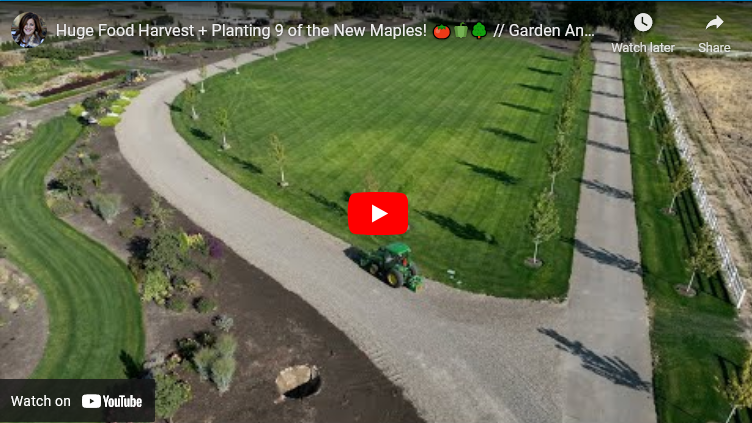
This was a full week at the arboretum. The garden gave us a big harvest. Nine new maple trees went into the ground. The drone also gave us a fresh look at the whole property.
Each job felt small on its own. Together, they showed how fast a young landscape can change when steady work adds up.
The maples added long-term structure. The vegetables showed what the soil can produce right now. The aerial views helped connect both parts of the plan.
An arboretum grows one tree at a time. Some trees are planted for shade. Some bring fall color. Others support wildlife or help build a useful collection.
That is what makes a project like this fun to follow. You can see the land change from week to week, but you can also imagine what it may look like years from now.
This update brings those ideas together: planting, harvesting, planning, and looking at the property from a new angle.
Nine New Maples Change the View
Nine trees may not sound like much on a large property. Once they are in the ground, though, they begin to shape the space.
Maples can add shade, strong form, and bright fall color. Their size also makes placement important. A young tree needs room for its roots and crown to grow.
Good planting starts with depth. The root flare should stay visible near the soil line. The hole should be wide enough for roots to move into nearby soil. The University of Minnesota Extension explains these basics in its guide to planting trees and shrubs.
After planting, water the full root zone. Add a broad layer of mulch, but keep the mulch away from the trunk. That helps hold moisture without burying the root flare.
A tree watering bag on Amazon can be useful when a new tree needs slow, steady water during dry weather.
The Harvest Shows What the Garden Can Do
The trees were only part of the week. The food garden also produced a large harvest.
That mix is one of the best parts of the property. Long-lived trees grow beside beds that can feed people in the same season.
Our summer vegetable garden guide shows the same rhythm on a smaller scale. Plant, water, watch, harvest, and then start the next round.
The harvest also gives quick feedback. Healthy crops can show where sun, soil, and water are working well. Those lessons can help with future beds and paths.
Drone Views Help With the Big Picture
From the ground, a planting project is close and physical. You see a hole, a root ball, a shovel, and a hose.
From the air, the pattern becomes clear. You can see rows, open space, tree groups, garden beds, and the paths that tie them together.
That makes aerial footage useful for more than pretty views. It can help show where a future tree might fit or where a path would make sense.
If you prefer pencil and paper, our garden design drawing guide offers another simple way to plan a landscape before making changes on the ground.
An Auger Makes Repeated Planting Easier
Planting nine trees means digging nine large holes. That is where an auger can save time and effort.
The tool still needs care. A hole should not become a narrow tube that forces roots down. The finished planting space should let roots move outward into the surrounding soil.
For anyone doing several plantings, there are many garden auger options on Amazon. The right size depends on the job and the soil.
A Tree Collection Needs a Plan
An arboretum is more than a group of trees. The collection becomes more useful when each tree has a reason for being there.
You might plant for fall color, wildlife, shade, fruit, unusual species, or education. Those goals help decide where each tree belongs.
It can also be useful to mix ornamental trees with food-producing trees. For example, Plant Hoarder has a Dorsett Golden apple tree that shows how a fruit tree can add both structure and a harvest to a landscape.
The key is to leave enough room. Trees that look tiny at planting can become large parts of the landscape later.
Keep the Ground Around New Trees Simple
New trees need steady care more than fancy treatment. Water them when the root zone begins to dry. Keep weeds and grass from crowding the trunk.
Mulch can help, but more is not always better. A wide, shallow ring works better than a pile against the bark.
Seasonal cleanup matters too. Our fall garden cleanup guide explains why leaving some useful plant material while removing real problems can make the landscape easier to manage.
The Project Is Starting to Feel Established
The best part of this update is not one maple, one harvest basket, or one drone shot. It is seeing all of those pieces begin to work together.
The property is becoming a tree collection, a food garden, a wildlife space, and a place to learn. Each week adds another layer.
Nine new maples now have a start. The garden gave back a strong harvest. The drone showed where the project has been and where it may go next.
That is how a young arboretum grows. One tree, one bed, and one season at a time.