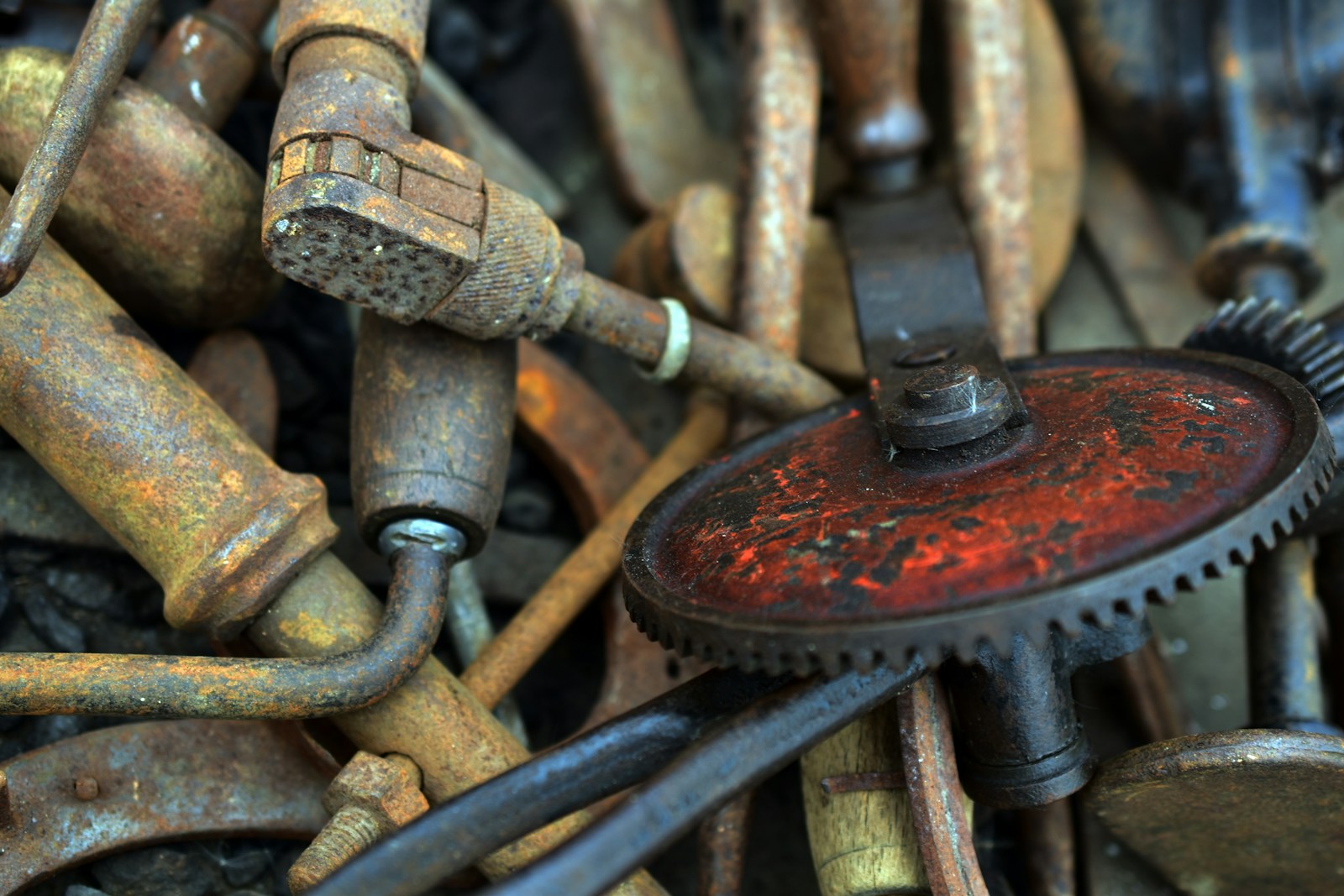
Rust can make a good tool look worn out fast. A light orange film can also make blades drag, joints feel rough, and clean work harder than it should be.
The good news is that most surface rust is easy to fix. You do not need a full workshop. A brush, a mild cleaner, a dry cloth, and a little oil can do a lot.
Start with the least harsh method that fits the job. Light rust needs less work. Thick scale may need more scrubbing. The goal is to save the tool, not grind away good metal.
Work where you have fresh air. Wear eye protection when you brush or sand metal. Gloves are also a good idea when you use cleaners or work around sharp edges.
Before you begin, wipe off dirt, sap, and loose rust. A nylon brush or brass brush works well for this first pass. Tight spots may need an old toothbrush.
Once the loose dirt is gone, look at the metal. A thin haze is light rust. Rough orange spots are moderate rust. Thick flakes or deep pits mean the rust is heavier.
Start With Light Rust
For a light film, try a damp baking soda paste. Rub it on the rusty area, let it sit for a short time, then scrub with a nylon or brass brush. Rinse the metal and dry it at once.
A rust eraser is also handy for small spots on blades, plane soles, and hand tools. Use light pressure so you do not change the shape of an edge.
Use Vinegar With Care
White vinegar can loosen rust on plain steel, but it should not be treated as an everyday cleaner. Soak only the metal part, check it often, scrub, rinse, and dry it well. Do not leave plated or coated parts in acid without testing a small spot first.
University of Minnesota Extension notes that vinegar can add to rust on some pruning tools during routine cleaning. Their advice is a good reminder to use mild soap and water for normal care, then lubricate the tool after cleaning. Read their guidance on caring for winter pruning tools.
Try Citric Acid for Tougher Spots
Citric acid can work faster than vinegar on moderate rust. Mix a small amount with warm water, soak the metal, and check it often. Scrub when the rust softens. Then rinse and dry the tool right away.
If you work on rusty garden tools often, a simple wire brush set can make cleanup easier. Use the softest brush that will do the job.
When Scrubbing Is the Better Choice
Some rust does not need a soak. Fine sandpaper, steel wool, a rust eraser, or a hand wire brush may be enough. Start gently. Heavy pressure can scratch good metal or round a cutting edge.
A powered wire wheel can help with thick scale on sturdy parts. Wear eye protection and keep the part moving. Do not press hard. Thin blades and fine edges are better handled by hand.
Dry the Tool Right Away
Drying is one of the most important steps. Water left in a hinge, seam, or rough spot can start fresh rust very fast.
Wipe the tool with a clean cloth. Open and close moving parts while you dry them. A little warm air from a hair dryer can help push moisture out of joints and screw threads.
This is especially useful after wet fall cleanup. Our fall garden cleanup guide is a good place to build tool care into the end of the season.
Protect Bare Steel
Clean bare steel needs a thin coat of protection. Light machine oil works well on hinges, pliers, and many shop tools. Food-safe mineral oil is a simple choice for tools used near food.
Paste wax can work well on flat metal faces such as shovel blades, saw plates, and plane soles. Wipe on a small amount, let it haze if the product calls for it, and buff off the extra.
Outdoor gear also lasts longer when it is kept clean, dry, and protected in storage. Noah’s Outdoors makes the same basic point in its advice on off-season gear care.
Garden Tools Need Extra Care
Shovels, hoes, trowels, and pruners spend a lot of time around wet soil and plant sap. That makes them easy targets for rust.
Knock off soil before you put them away. Wipe blades dry. Clean sticky sap from pruners. Add a light coat of oil to bare steel and a small drop at the pivot.
Winter is also a good time to inspect, clean, and sharpen tools before spring work starts. See our winter gardening guide for other useful cold-season jobs.
Store Tools Where They Stay Dry
Good storage prevents more rust than any cleaner can remove. Keep tools off damp floors. Hang them when you can. Give the storage area some airflow.
Silica gel packs can help in small toolboxes and drawers. They are not a cure for a wet shed, but they can lower moisture in a closed space.
Before a long break, wipe metal parts with a thin film of oil. This is a small job, but it can save a lot of work later. It also fits well with a broader climate-smart garden routine that plans for wet weather and changing seasons.
A Two-Minute After-Use Routine
- Brush off soil and dirt.
- Wipe away moisture.
- Spot-clean any new orange rust.
- Add a drop of oil to bare steel or joints.
- Put the tool back in a dry place.
What Not to Do
- Do not mix cleaners or chemicals.
- Do not leave acid soaks unchecked.
- Do not grind thin cutting edges until they get hot.
- Do not put tools away wet.
- Do not skip eye protection when brushing or grinding rust.
Keep the Routine Simple
Rust control does not need to be hard. Clean the tool. Use the mildest method that works. Dry it well. Protect the metal. Store it in a dry place.
Those small steps can add years to a good wrench, shovel, saw, or pair of pruners. A few minutes of care now is much easier than a full rust rescue later.