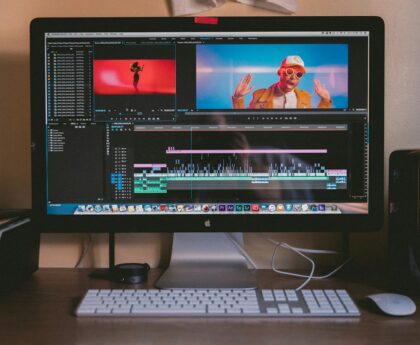
A popular science video can make a subject feel simple without making the science itself simple. That is one reason viewers return to the Veritasium channel: a good episode starts with a question ordinary people can understand, then reveals how much careful reasoning is needed to answer it. For creators, the value lies in the storytelling choices rather than copying the subject or the host.
One useful example is the channel’s treatment of fibre optics, an infrastructure technology most of us depend on without seeing. The video turns invisible light transmission into a series of visible explanations. That shift from abstract information to physical evidence is a useful lesson for anyone planning a documentary, educational short or product demonstration.
Begin with a question that matters
Viewers need to know why the topic deserves their time. A fibre-optic cable is not inherently dramatic, but the question of how information travels across continents connects to everyday phone calls, banking and streaming. The opening should establish a real puzzle and make a promise the rest of the video can fulfil.
Do not use a sensational headline that the footage cannot support. A useful hook raises curiosity without inventing a controversy. Show the audience the object or phenomenon first, then introduce the explanation. If the viewer understands the stakes, technical detail becomes easier to follow.
Use physical demonstrations
Light moving through a glass fibre is difficult to film directly. Demonstrations, diagrams and carefully labelled animations can bridge that gap. Each visual should answer a specific question rather than merely decorate the narration. If a model simplifies the real system, explain what has been simplified.
The earlier analysis of Veritasium’s fibre-optics storytelling looks at how the topic becomes accessible. The wider lesson is that an explanation gains strength when the viewer can see the evidence and understand its limits.
Make the camera do explanatory work
A close-up can show the scale of a component; a wide shot can establish how it fits into a larger system. Cut between them only when the change in perspective adds information. A sequence of attractive shots is not automatically a clear explanation. Ask whether a viewer could follow the logic with the sound muted.
Captions and on-screen labels help when they identify a dimension, direction or measurement. Keep them readable long enough to register. Avoid placing several competing graphics over the same frame. The goal is not to make the screen look busy; it is to reduce the mental effort needed to understand the subject.
Keep the original experiment intact
Science content often depends on a particular setup. If an editor removes the control condition or the failed trial, the remaining footage can imply a stronger result than the experiment supports. Preserve enough of the process to show what was measured and what changed. A transparent edit can still be concise.
When creating a shorter cut for social media, state clearly when the clip is an excerpt. Link to the longer explanation where appropriate. Resist the temptation to turn uncertainty into certainty for a stronger thumbnail. Trust is difficult to rebuild once an audience realises that the most important caveat was removed.
Use sound with restraint
Music can provide momentum, but it should not drown out technical explanations. Natural sound can be especially useful when an experiment includes a physical action that the viewer needs to understand. Record clean dialogue, minimise background noise and test the mix on a phone speaker before publishing.
An exaggerated sound effect can make a subtle result feel like a dramatic impact. That may entertain, but it can also mislead. Match the sound to the evidence. Where a demonstration is reconstructed or simulated, label it so the viewer knows what is being shown.
Plan the middle before the opening
Many educational videos begin strongly and then become a series of disconnected facts. Write the central question at the top of the outline and make each section move toward an answer. A useful sequence is: what people assume, what the demonstration shows, why the assumption fails and what the better explanation means.
Keep the technical language accurate, but introduce unfamiliar terms only when the audience needs them. Define a term in plain English and reinforce it with a visual example. A glossary can help in written companion material, but the video itself should remain understandable without constant pausing.
Make the video accessible
Accurate captions support viewers watching without sound and people who are deaf or hard of hearing. Review automatic transcripts for mistakes in names, equations and units. Provide useful descriptions of essential visual information rather than assuming every viewer can see the screen.
YouTube’s caption editing guidance explains how creators can add or improve subtitles. Captions are not merely a compliance exercise; they also make material easier to revisit, quote and translate.
Build a companion archive
Keep the original recordings, graphics, music licences and editing project so that future corrections are possible. Store source notes and research links alongside the footage. If a viewer raises a legitimate question, the creator should be able to return to the evidence rather than reconstruct the entire project from memory.
Our companion discussion of restore testing illustrates a related principle: saving files is not the same as proving they can be recovered. Test a sample archive before an emergency makes recovery urgent.
What small creators can copy
You do not need a laboratory or a large crew to apply these lessons. Choose a question your audience cares about, find a safe demonstration that makes the answer visible, film the setup honestly and use the edit to clarify rather than exaggerate. A carefully framed tabletop experiment can be more persuasive than an expensive montage.
Write the script after reviewing the actual footage if the outcome is uncertain. That prevents the narration from promising a result the experiment did not produce. Show mistakes when they explain the process, and cut repetition when it adds nothing. The result should feel earned.
Keep curiosity and accuracy together
The strongest science videos leave the viewer with a better question as well as an answer. They distinguish what has been measured from what remains unknown, and they invite viewers to think rather than simply applaud a reveal. That balance makes the work useful beyond a single news cycle.
Creators who learn from successful educational videos should focus on structure, evidence, clarity and respect for the audience. Those are transferable skills whether the subject is fibre optics, gardening equipment, a woodworking project or an everyday technology.